How They Actually Cut the Volume
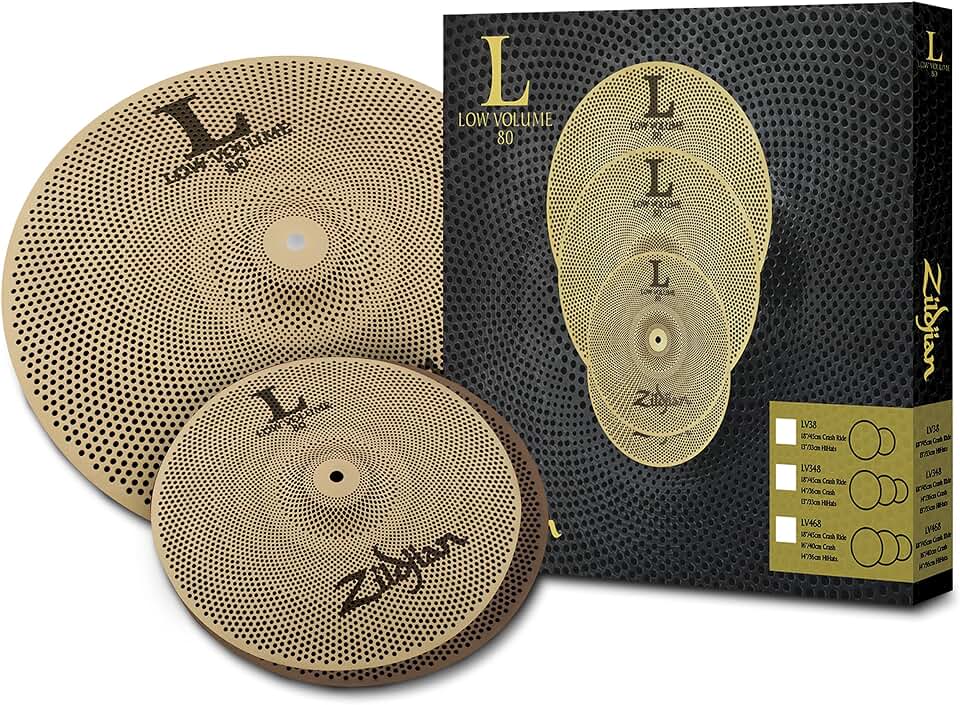
The quiet comes from the build, not a gimmick. The cymbals use a nano-plated alloy surface with a spiral-perforated design — small holes patterned across the cymbal that let a lot of the sound escape as air instead of ringing out as noise. That's why they can drop volume by roughly 80% while still moving and responding like a normal cymbal when you strike it.
Sizes and Sets You Can Buy
Evans sells dB One cymbals as individual pieces and as sets:
- Individual cymbals in sizes like 18" and 20"
- A 4-piece set with a pair of 14" hi-hats, a 16" crash, and an 18" cymbal
The Combo Pack: Cymbals Plus Drumheads
Evans also sells a bundle that pairs the low volume cymbals with matching dB One drumheads. A typical pack includes three tom heads (10", 12", and 16") and a 22" bass drumhead alongside the cymbals, so you can quiet down the whole kit — skins and cymbals — in one purchase instead of piecing it together over time.
Do They Feel Like Real Cymbals?
Evans markets the dB One line as playing and feeling like full-volume cymbals, just quieter — real stick rebound, real hi-hat chick, real crash motion, not a dead thud. That's the main selling point over a rubber or mesh cymbal pad: you're still working with an actual vibrating cymbal, which matters if you're trying to build real technique and dynamics, not just muscle memory on a mute pad.
Who These Are For
If you live in an apartment and want to keep an acoustic kit instead of switching to an electronic drum set, low volume cymbals are one of the more effective single upgrades you can make — cymbals are often the loudest, most piercing part of a kit, especially hi-hats and crashes. They also show up in quieter live setups like musical theatre pits, where the venue wants less cymbal wash bleeding into the mix — though in that context, real (non-low-volume) drumheads are still generally used on the drums themselves, since the shells don't carry the same volume problem cymbals do.
What Low Volume Cymbals Won't Solve
They cut the sharp, high-frequency ring of cymbals — they don't touch the low-frequency thump that travels through your floor from the kick drum and toms, which can be what actually annoys people in the room below you. If vibration through the floor is your bigger problem, an anti-vibration mat or riser under the whole kit does more for that than any cymbal swap. And if you need near-total silence — say, practicing late at night — ear plugs protect your hearing while you play quieter gear, but they don't reduce what your neighbors hear; only the gear itself does that.
Bottom Line
Evans dB One cymbals are a genuine option if you want to keep an acoustic kit's feel while meaningfully lowering the noise your cymbals put out. They're not a silent-practice solution on their own — pair them with attention to your drumheads, your floor, and realistic expectations about what "quiet" means in an apartment.