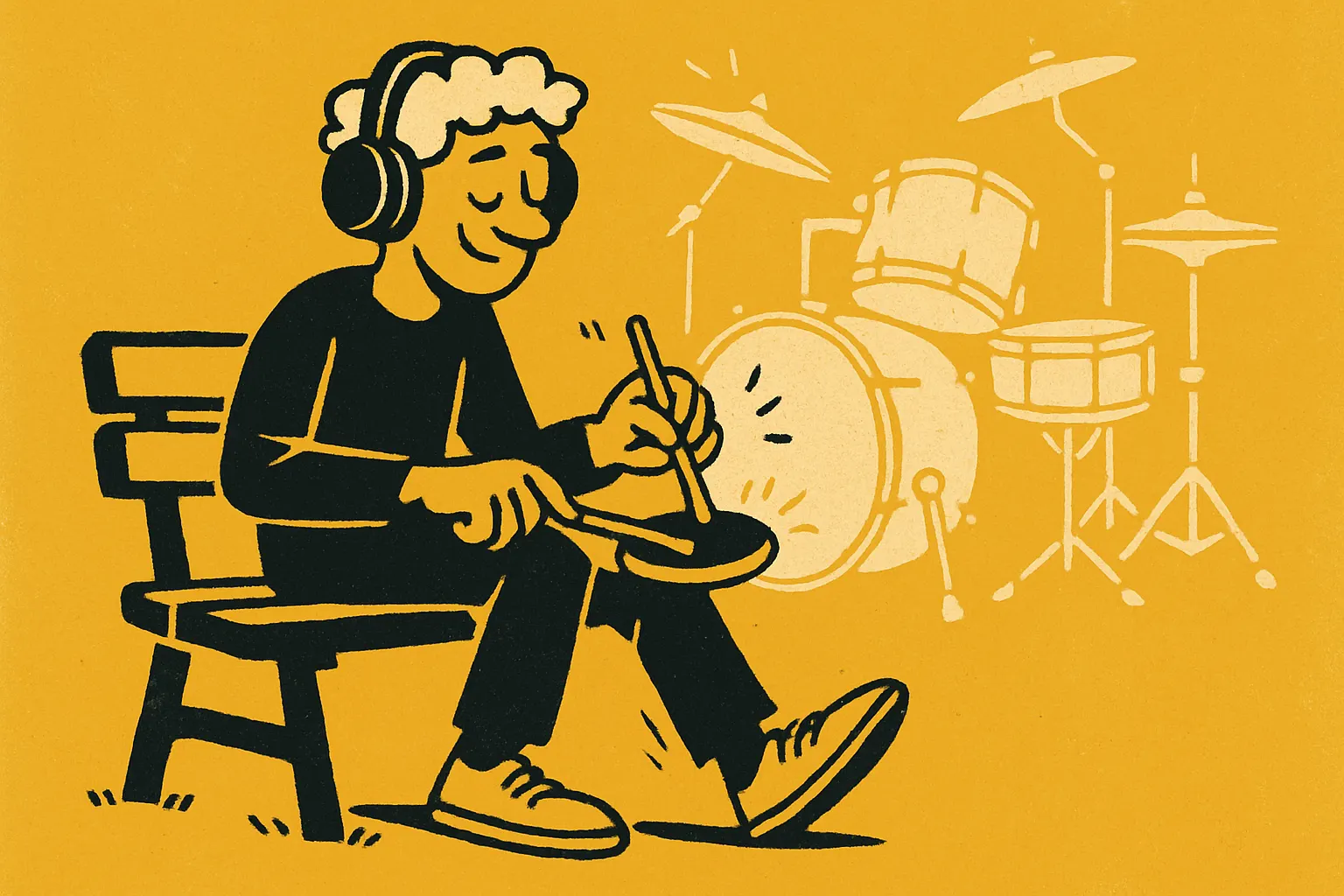
A practice pad is a small rubber, mesh, or fabric-covered surface you hit with sticks instead of a drum — it lets you build hand technique and rhythm without needing a full kit or bothering anyone nearby. It won't replace a kit for learning groove or coordination, but for stick control, warm-ups, and quiet practice, it's one of the cheapest, more useful things you can own.
What a Practice Pad Actually Does
A pad gives you somewhere to put reps in without noise. That's the whole point. You're not trying to make it sound like a snare drum — you're training your hands (and sometimes your feet) to move correctly and consistently. Because it's quiet, you can practice at night, in an apartment, or anywhere you'd otherwise disturb someone.
Practice pads are useful at every stage, not just for beginners, but they can matter more early on when your hands need extra reps to build basic control.
Who Needs One (and Who Can Skip It)
If you're learning stick technique, rudiments, or just warming up before you sit at a kit, a pad is worth owning — it's inexpensive and takes almost no space. If you already have a quiet electronic kit you can practice on anytime, a pad is less essential, though many drummers still keep one around for travel or silent warm-ups. If you're only ever practicing on an acoustic kit in a space where noise isn't an issue, a pad is optional rather than necessary.
Types of Practice Pads
Practice pads aren't one-size-fits-all. The main categories:
- Single-surface pads — one hitting surface, usually mounted on a stand or held on your lap. Simple and cheap.
- Multi-surface / double-sided pads — different textures or tensions on each side, so you can practice on a softer or firmer feel depending on what you're working on.
- Kick drum practice pads — designed to sit on the floor and be played with a bass drum pedal, useful if you want to work on foot technique without a full bass drum.
- Full pad kits — a set of multiple pads arranged to mimic a drum kit layout, like DW's Smart Practice line, built to replicate the feel of playing a full kit without the volume.
- Marching pads — larger pads, typically 15–36 cm (6–14 in), used by marching and drum corps players for rehearsal.
Some pads also come with rims built in, like Vic Firth's Heavy Hitter Quadropad, which lets you practice rim shots and rim clicks along with the head.
What Actually Matters When Choosing One
- Surface material — rubber, neoprene, mesh, and fabric all feel different. Rubber tends to be firmer and louder; mesh and fabric are usually quieter and softer underfoot (or under stick).
- Rebound feel — some pads are bouncier, some are dead and absorb the stick. Neither is objectively better; it depends on what you're practicing and personal preference.
- Size — bigger pads give more room to work across the surface; smaller pads are easier to travel with.
- Mounting — check whether the pad sits on a stand, straps to your leg, or just rests on a table or your lap. This affects how usable it is in the exact spot you'll actually practice.
What Doesn't Matter Much
Brand name and price don't tell you much about whether a pad will suit you — an entry-level rubber pad and a mid-range pad can both do the job of giving your hands reps. What matters more is whether the feel and size fit how and where you'll actually practice. If you want a shortcut past the guesswork, our best practice pads for beginners guide narrows it down.
A Few Models Worth Knowing
Vic Firth makes both single-sided and double-sided pads, plus the multi-pad Heavy Hitter Quadropad with rims for more advanced practice setups. Other pads reviewed and compared by drummers include the Drumeo P4 Pat Petrillo, the Evans ReelFeel, and the Ahead Wicked Chops — each with a different surface feel and bounce, which is why side-by-side comparisons of feel matter more than specs on paper.
Practice Pad vs. Practice Tips
If you don't want to carry a pad at all, some companies — Vic Firth included — sell universal practice tips that slide onto the ends of your drum sticks and quiet down whatever you hit, pad or otherwise. It's a smaller, more portable alternative if space is tight, though it doesn't give you a dedicated surface to work on.
Trade-offs / When a Pad Isn't Enough
A pad is great for hands. It won't teach you how a groove feels across a full kit, how your feet coordinate with your hands, or how a fill lands when the whole kit is involved — for that you eventually need time on a real or electronic kit. If quiet full-kit practice is really what you're after, it's worth looking at electronic drum sets for beginners instead of, or alongside, a pad. And if vibration through the floor is the bigger issue in your space, an anti-vibration mat solves a different problem than a pad does.
A practice pad is a small, low-cost tool that does one job well: it gives your hands somewhere to work without waking the house. Buy one, keep it near where you already sit, and use it for warm-ups and rep work — not as a full substitute for time on a kit.

