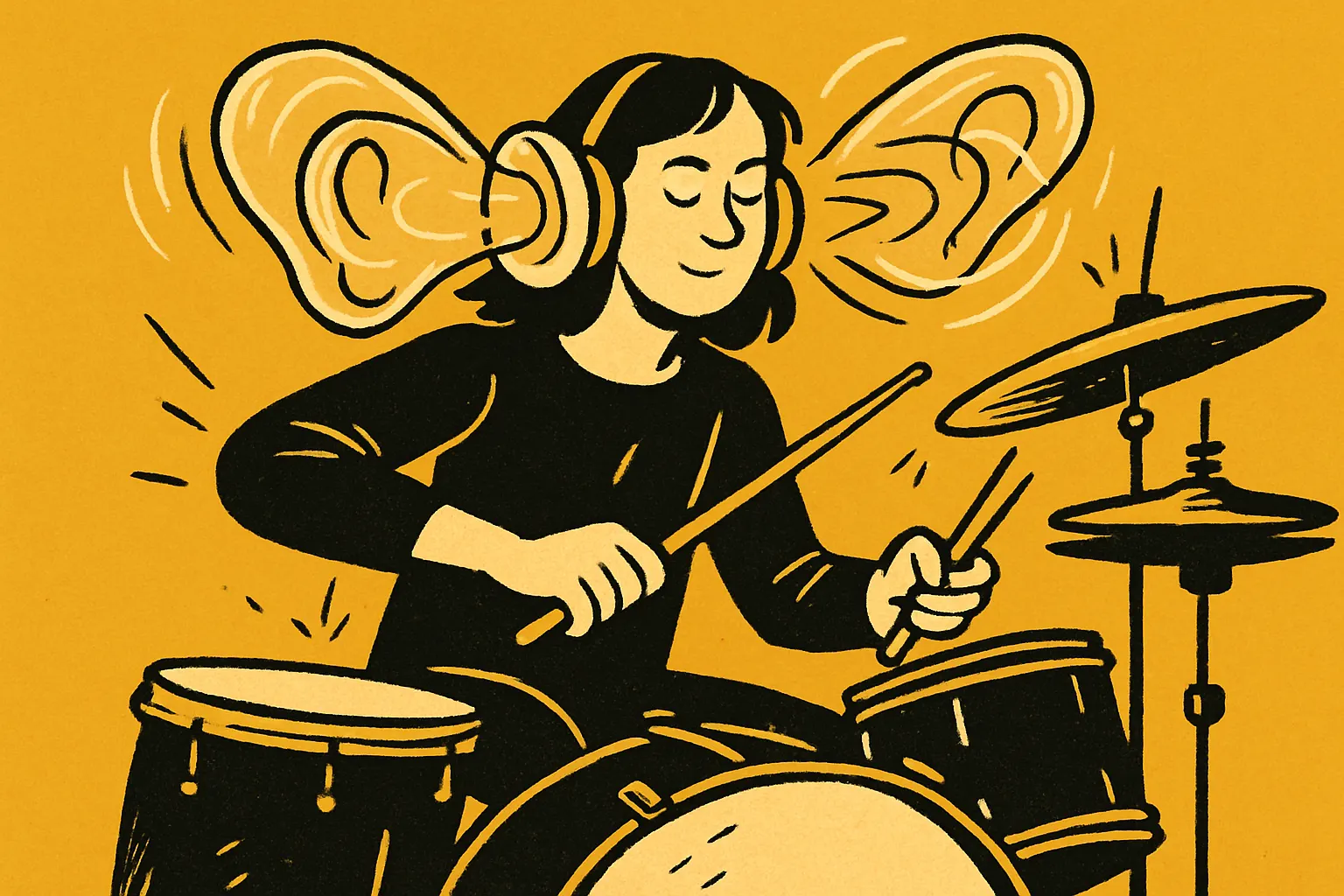
Drums are loud enough to damage hearing over time, and beginners often don't notice until it's done. Musician's earplugs lower the volume evenly so the kit still sounds natural. Start protecting your ears from day one.
Foam plugs from the hardware store block sound unevenly — cymbals and hi-hat get scooped out and the kit turns into a dull thud. Musician's plugs use a filter to lower the volume more evenly, so the snare still sounds like a snare. Foam is better than nothing if it's all you have, but filtered plugs make it much easier to hear what you're playing.
Fit matters more than the brand
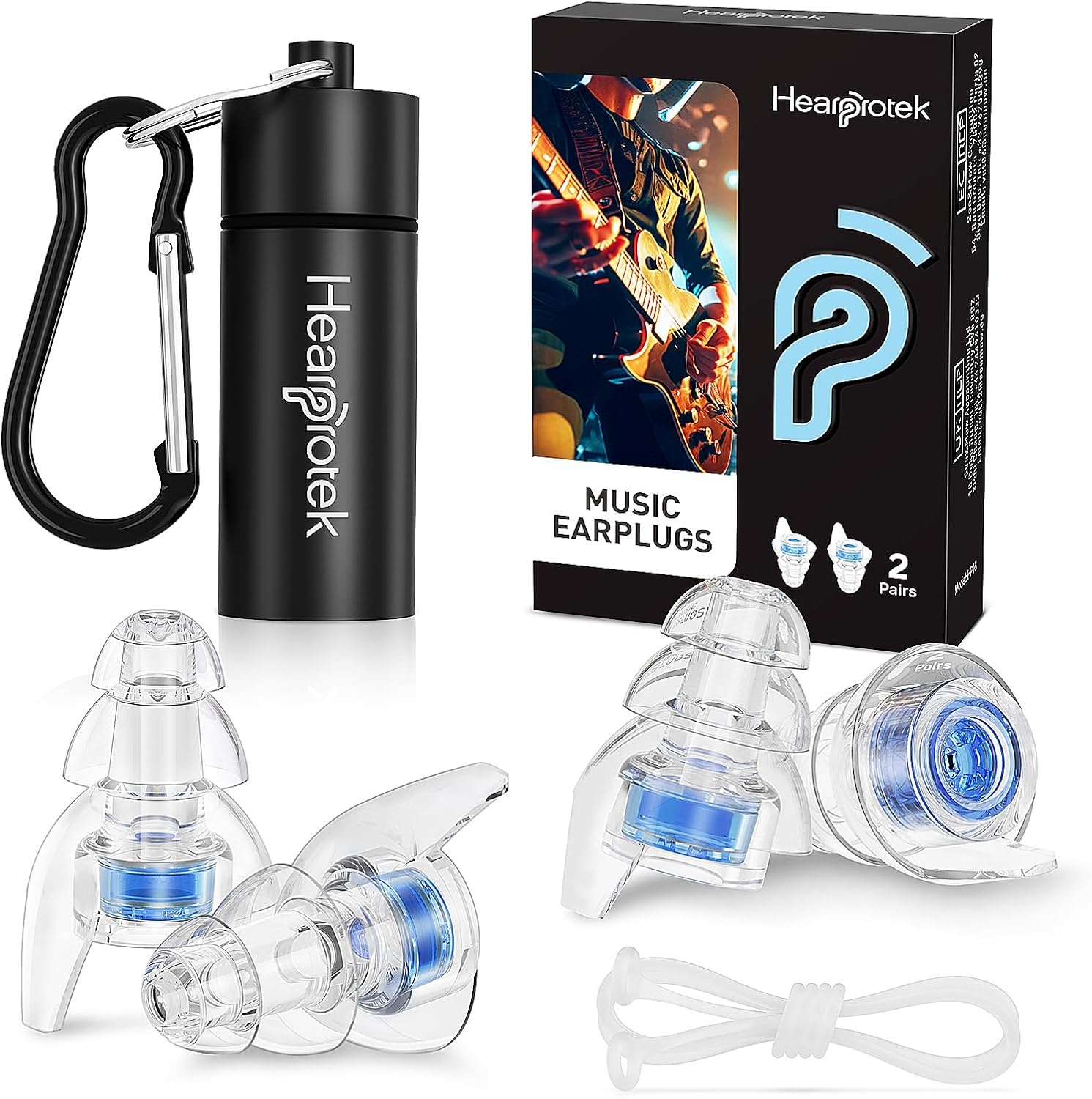
A plug that doesn't seal properly isn't protecting you, and a plug that falls out mid-groove is worse than useless. Look for sets that include several tip or shell sizes so you can test what seals in your ear — the Loop set includes four tip sizes, the Hearprotek pair includes two, and the Eargasm shells come in standard and small. Expect to try a couple before one feels right, and expect insertion to feel awkward at first.
How much reduction you want
The numbers on these boxes (17 dB, 20 dB, 21 dB) are roughly how much volume comes off, and higher isn't automatically better. Too much reduction and you feel disconnected from the kit; too little and a loud room still wears you down. For acoustic drum practice, anything in this range is a reasonable starting point — pick based on fit and comfort first, then adjust if the kit sounds too distant.
Comfort for a long session, and profile
You'll wear these for 30–60 minutes at a stretch, so pressure and shape matter. Low-profile plugs that sit flush are easier to live with if you wear over-ear headphones on top of them, which is common if you're playing to a metronome or backing tracks. Bulkier plugs can get pushed around by headphone cups and break their seal.
A case you'll carry
Small plugs disappear fast. A keychain or carabiner case is the difference between having them at every practice and finding one plug in a pocket three weeks later. It sounds minor, but the plugs you can't find don't protect anything — a spare pair in the stick bag solves the same problem for less money.
We looked for filtered musician's plugs that come with more than one size option, since a beginner's biggest problem here is getting a seal, not chasing a spec. Each pick is honest about a real annoyance: the Loop tips may need swapping, the budget Hearprotek silicone is soft and can be fiddly to insert, and the Eargasm filters take practice to seat. All three come with a case you can clip to a bag, because the plugs you actually carry are the ones that help.
Frequently asked questions
Do I really need earplugs if I'm just a beginner practicing at home?
Yes — an acoustic kit in a small room is loud whether you're good at it or not, and hearing loss builds up quietly over time. There's no beginner grace period where the volume is safe. Start wearing protection from your first session and it becomes a habit you never have to fix later.
Can I use cheap foam earplugs instead?
You can, and it's far better than playing with bare ears. The tradeoff is sound quality: foam tends to cut the high end hard, so cymbals and ghost notes get muddy and it's harder to hear what your hands are doing. If budget is tight, foam now and filtered plugs later is a sensible order.
Will earplugs make it harder to hear a metronome or a backing track?
They lower everything, including the click, so you'll usually need to turn the track up a little. Many drummers wear plugs under over-ear headphones or use isolation headphones instead. If you go the headphone route, keep the volume only as high as you need to hear the click over the kit.
Why does my own voice sound strange with them in?
That's normal — plugging your ears makes your voice resonate through your head instead of arriving through the air. It's noticeable if you count out loud or sing along while you play. It doesn't mean the plugs are in wrong, and it stops being distracting once you're used to it.
Do I need earplugs for an electronic kit?
For the pads themselves, usually not — but the stick and pedal noise is real, and the risk moves into your headphones. Watch your headphone volume: cranking a backing track loud enough to bury the pad clatter is its own hearing problem.
How much should I spend on my first pair?
A budget two-pack is enough to start, and having a spare means you're less likely to skip a session because you can't find them. Spending more mostly buys a more discreet profile, more size options, and a sturdier case — worth it if you're playing with other people, less urgent if you're alone in a basement.
How do I know they're seated correctly?
The room should get noticeably quieter and stay quiet when you move your jaw or turn your head. If sound levels jump around, the seal is breaking and you should try a different tip or shell size. Gently tugging your earlobe while inserting can help the plug slide in far enough.