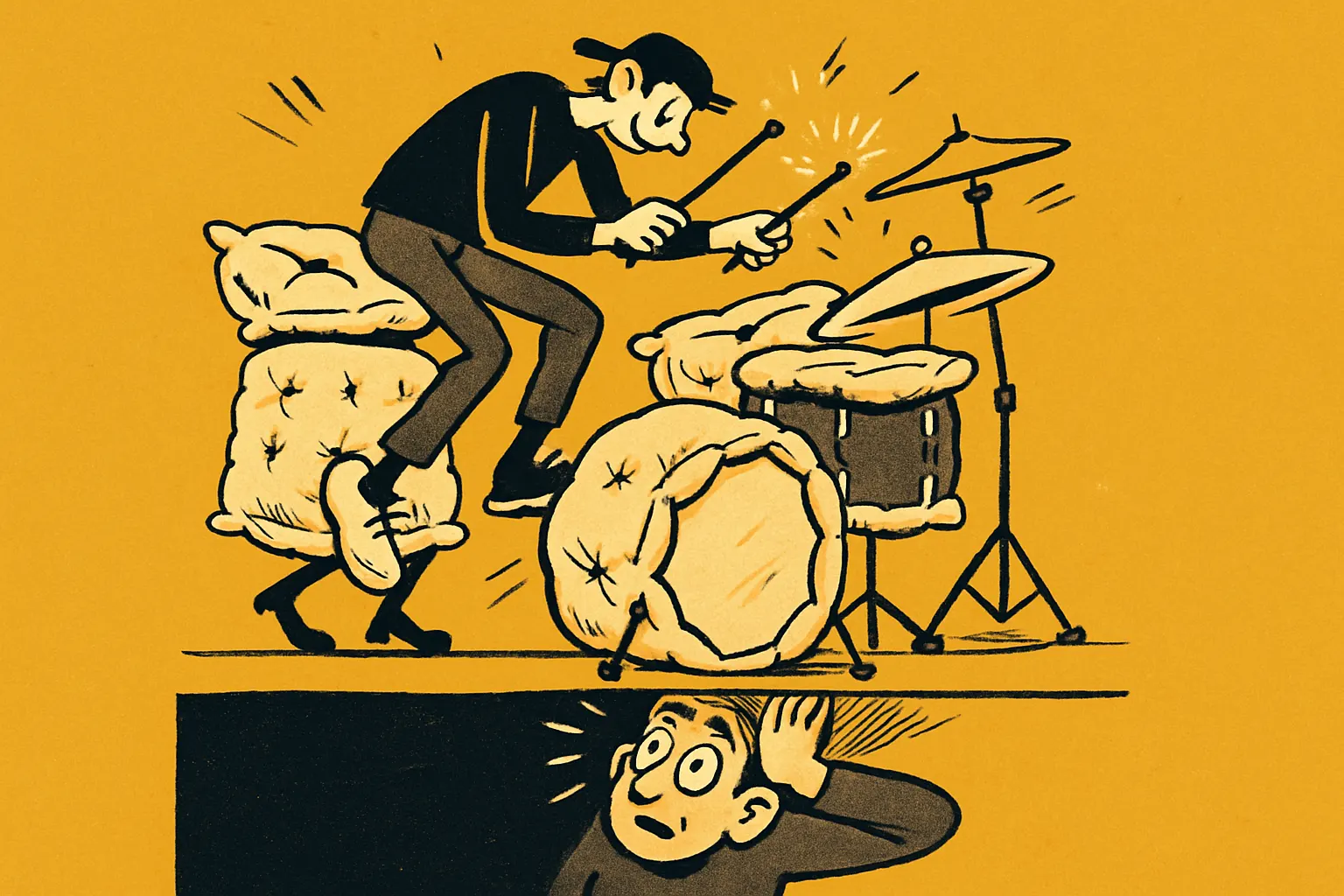
You can't make a full acoustic kit silent, but you can get close enough to keep the peace. The two real paths are: switch to an electronic kit and headphones for near-silent practice, or keep your acoustic kit and cut its volume with mutes, a mat, and smart timing. Which one fits depends on whether you need to build technique quietly or actually want to play a full kit without your neighbors noticing.
Why Drums Are So Hard to Keep Quiet
There are two separate problems here, and they need different fixes.
Airborne sound is the crash of a cymbal or the crack of a snare — it travels through the air and through walls. Rugs, foam, and closed doors help with this kind of noise.
Vibration is the low thump of a bass drum, a floor tom, or a kick pedal hitting the floor. This travels through the structure of the building itself — the floor, the joists, the walls — often more strongly to the apartment below you than to the one next door. This is why a room that sounds "treated" with rugs and foam can still bother a downstairs neighbor: foam absorbs airborne sound, not structural vibration.
Any apartment drumming plan has to deal with both.
Fixes Ranked by Impact
1. An electronic kit with headphones
This is the closest thing to a full solution. A mesh-head electronic drum set lets you play full patterns — kick, snare, cymbals, fills — while the sound stays in your headphones. Pair it with a solid pair of headphones for electronic drums and the kit itself makes only a soft tapping sound, not a drum sound. There's still some mechanical noise from the pedal and pads hitting their stands, but it's far below an acoustic kit.
2. A practice pad for pure technique work
If you're working on sticking patterns, rudiments, or just building hand speed, you don't need a full kit at all. A practice pad with a decent pair of drum sticks is nearly silent and works on a table, your lap, or a stand. It won't teach you kit coordination, but for pure hand technique it's the quietest option there is.
3. Mute your acoustic kit
Rubber or gel mutes on your drum heads and cymbals cut a meaningful amount of volume — the crack of the snare and the ring of the cymbals both drop a lot. What mutes don't fully solve is the bass drum: even muted, the kick pedal beater striking the head sends a thump into the floor. Mutes help, but they're not the whole answer for a downstairs neighbor.
4. An anti-vibration mat or riser under the kit
Placing your kit on an anti-vibration mat reduces some of the vibration that transfers through the hardware feet and bass drum into the floor. It's a real improvement, not a myth — but it reduces vibration, it doesn't eliminate it. Don't expect a mat alone to make an acoustic kit apartment-safe.
5. Time your practice and talk to your neighbors
Practicing during reasonable daytime hours and giving neighbors a heads-up about when you play goes a long way. This doesn't reduce the actual sound, but it changes how much it bothers people — a short session at 2pm lands very differently than the same session at 11pm.
What Won't Actually Fix It
A few things sound like solutions but mostly aren't:
- A rug under the kit, on its own, won't stop your neighbors from feeling the bass drum. Rugs help a little with airborne sound and skidding hardware, but they don't do much against structural vibration.
- Playing "softer" on an acoustic kit still sends low frequency into the floor. Volume and vibration transfer aren't the same thing — even a quiet kick hit thumps the floor.
- Foam panels on the walls help room acoustics and reflections, not the floor vibration a neighbor below you feels. Foam is for controlling how a room sounds to you, not for stopping transmission through the building.
Protecting Your Own Ears While You're At It
Quiet-for-the-neighbors isn't the same as quiet-for-you. If you're playing an electronic kit through headphones, it's easy to push the volume up without noticing, and if you're playing an acoustic kit with mutes, cymbals can still be sharp up close. A pair of ear plugs is worth having either way — cheap insurance for something you can't get back.
Setting Up a Quiet Practice Space
If you're building out an electronic setup, comfort matters too — a stable drum throne and a responsive bass drum pedal make practice sessions easier to sit through, quiet or not. None of this replaces the core fix, but a setup that's comfortable to sit at is one you'll actually use.
No full acoustic kit is truly apartment-silent. If you need to practice a complete kit regularly without disturbing anyone, an electronic kit and headphones is the realistic answer. If you're happy building technique quietly for now, a pad and sticks will get you a long way.