Drummer Survival

Best Drum Risers & Anti-Vibration Mats for Apartments

Illustration for “Best Drum Risers & Anti-Vibration Mats for Apartments”

In an apartment the biggest problem isn't airborne sound — it's the low-frequency thump traveling through the floor to your neighbours. A drum riser or isolation platform decouples the kick and kit from the floor; a dense mat helps under a smaller setup. These three help most in a flat.

By Sashko · Updated August 14, 2026

Why trust these picks →

Best overall

Gibraltar SC-BDPM Bass Drum Platform

Beginners with an 18" or 20" kick whose pedal beater sits too low on the head

Budget pick

Pyle PSI03 Speaker Riser Pads

Tight budgets and a pair of practice monitors on a desk or shelf

Upgrade pick

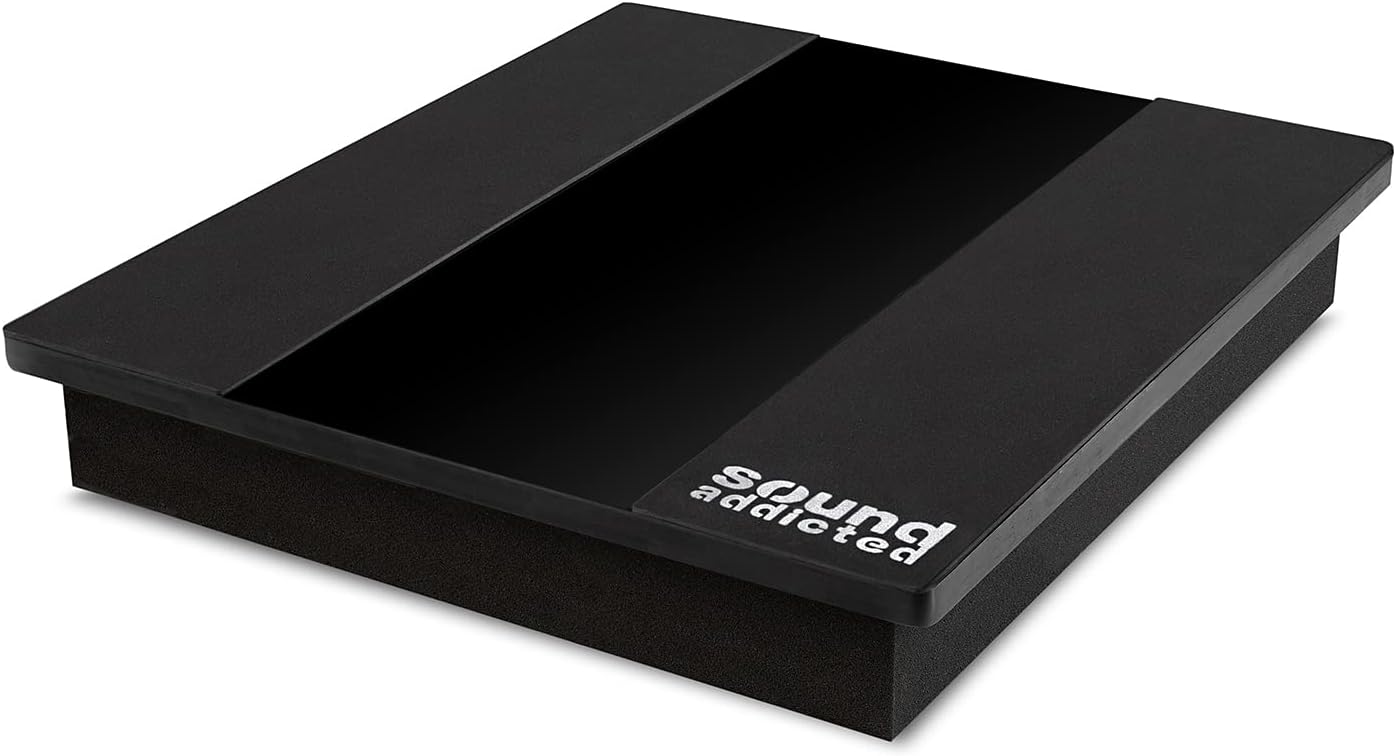
VibeBoss P10 Isolation Platform

Apartment practice setups where sub or monitor bass travels through the floor

What to look for

Work out what's actually shaking the floor

Two different problems get called "vibration." One is your kick pedal and kit legs punching low frequencies straight into the floorboards; the other is a subwoofer or monitor speaker doing the same thing while you play along to tracks. Those need different products, so decide which one is your issue before you buy anything.

Decoupling beats "thick"

A pad helps by separating the gear from the floor with something springy, not by being heavy. That's why foam-and-rubber platforms show up here instead of a plain slab. A thin dense mat can protect the floor and stop things sliding, but it won't do much for low-frequency thump on its own.

Foam-only vs a wood-cored platform

All-foam pads are cheaper and fine under a light speaker, but they compress and feel soft under load. A board core (MDF or plywood) over foam stays flat, so heavy gear doesn't sink in and tilt. If the item is heavy or you'll be nudging it around, pay for the rigid version.

Load rating and footprint, checked against your real gear

Load ratings vary a lot between pads — a pair of small monitors is a different job from one 10-inch sub. Measure the base of what you're lifting and compare it to the platform dimensions, because overhang on a foam pad defeats the point. Also note whether you get one pad or two; a stereo pair needs two.

Added height changes your setup

Every one of these lifts something by a couple of inches, and that moves your geometry. A 2-inch bass drum lift changes where the beater strikes the head, and a 2.5-inch platform under a desk monitor changes where it points. Expect to re-adjust your throne, pedal, or speaker angle afterward, and check the lift is worth that hassle.

Our picks

PickProductFitsMaterialItem weightLift heightPad sizeQuantityLoad capacityMaterialsPlatform sizePrice
Best overallGibraltar SC-BDPM Bass Drum PlatformGibraltar18" and 20" bass drumsMetal0.72 kg2 inchesCheck price
Budget pickPyle PSI03 Speaker Riser PadsPyleHigh-density foam with rubber base pad9" W x 12" D x 2" H2 pads33 lbs per riserCheck price
Upgrade pickVibeBoss P10 Isolation PlatformSound Addicted8-10 inch subwoofers165 poundsFoam, EVA, engineered wood (MDF) board13.7" x 15.7" x 2.5"Check price
Best overall

Gibraltar SC-BDPM Bass Drum Platform

Gibraltar

$ · Budget
Gibraltar SC-BDPM Bass Drum Platform Fits 18 Inch/20 Inch,Black

Best for: Beginners with an 18" or 20" kick whose pedal beater sits too low on the head

  • Raises a small bass drum 2" so the beater can hit closer to the center of the head
  • Metal build, not a plastic slab; reviewers say the pedal stays put once mounted
  • Cheap fix compared to full-size drum lifts
  • Designed for flat wooden hoops — one reviewer with a rounded metal hoop had to modify it to fit
  • Only helps if your kick is 18" or 20"; no use on a standard 22"
Budget pick

Pyle PSI03 Speaker Riser Pads

Pyle

$ · Budget
Pyle Sound Dampening Speaker Riser Foam - Audio Acoustic Noise Isolation Platform Pads Recoil Stabilizer For Studio Monitor, Subwoofer, Loud Speakers - Pyle PSI03 - Pack of 2,Black

Best for: Tight budgets and a pair of practice monitors on a desk or shelf

  • Two pads included, so a full monitor pair is covered for the price
  • Reversible with three tilt angles — useful when speakers sit above or below ear level
  • Anti-slip rubber base keeps speakers from creeping
  • Reviewers report less bass traveling into the room and to neighbors
  • 33 lb capacity per pad; too light for heavy subwoofers
  • All-foam construction, so less rigid underfoot than a wood-cored platform
Upgrade pick

VibeBoss P10 Isolation Platform

Sound Addicted

$$ · Mid-range
VibeBoss P10 - Acoustic Isolation Platform Suitable for 8-10 inches Subwoofers (13.7'' x 15.7'' x 2.5'')

Best for: Apartment practice setups where sub or monitor bass travels through the floor

  • Foam and EVA over an MDF board, so it stays stable rather than sagging
  • Non-slip base and 165 lb load rating — handles heavy gear
  • Apartment reviewers report less vibration reaching neighbors below
  • Sized for 8"-10" subs, a common home-studio size
  • Single platform at this price; you'd need two for a pair of monitors
  • 2.5" of added height can throw off speaker or monitor placement on a desk

How we picked

We picked around one honest limitation: there's no cheap purpose-built full drum riser for beginners, so the useful buys are small, specific fixes. The Gibraltar platform is here because a low beater on an 18" or 20" kick is a real beginner annoyance with a cheap solution; the Pyle pads cover a monitor pair on a tight budget; the VibeBoss adds a board core and a much higher load rating for heavier gear. We also weighed the stuff that gets glossed over — fit issues with rounded bass drum hoops, foam-only pads flexing under weight, and the fact that one platform doesn't cover two speakers.

Frequently asked questions

Do I even need one of these?

Maybe not. If nobody has complained and you're playing an electronic kit on carpet, spend the money on practice pads or a metronome instead. These help when low-frequency thump through the floor is a known problem — either from a kick pedal or from a sub or monitor sitting on a hard surface.

Will a riser or mat stop my neighbours complaining?

It can reduce what travels through the floor, but it won't make an acoustic kit quiet. Decoupling targets vibration through the structure; the sound moving through the air is a separate problem that mats don't touch. Treat it as one part of a wider approach, alongside playing hours, mesh heads, or a quieter setup.

What's the difference between a mat and a riser?

A mat is a dense layer that sits flat on the floor — good for stopping gear sliding and protecting the surface. A riser or isolation platform lifts gear off the floor with a springy layer in between, which is what helps with low-frequency thump. If your issue is the floor shaking, you want the lifting kind.

Can't I just DIY this with plywood and tennis balls?

You can, and lots of apartment drummers do. A board on top of something compliant is the same basic idea as a bought platform, and it costs less if you already have the materials. The trade you're making is time, mess, and a build that might wobble versus something sized and rated out of the box.

Why are speaker platforms on a drum page?

Because for many apartment beginners the bass hitting the floor comes from what they're playing along to, not the kit. A sub or monitor sitting directly on a hard floor pushes low frequencies straight into the structure, and lifting it off with a decoupling platform is one of the cheaper things you can try.

Will a 2-inch bass drum lift mess up my pedal and throne height?

It changes where the beater lands on the head, which is the point — on a small kick the beater can sit low, and lifting the drum brings it closer to center. Expect to re-check your pedal position and possibly your seat height after fitting it. Also check your bass drum hoop shape first, since flat wooden hoops are what this style of platform is built around.

Explore by topic

Related reading