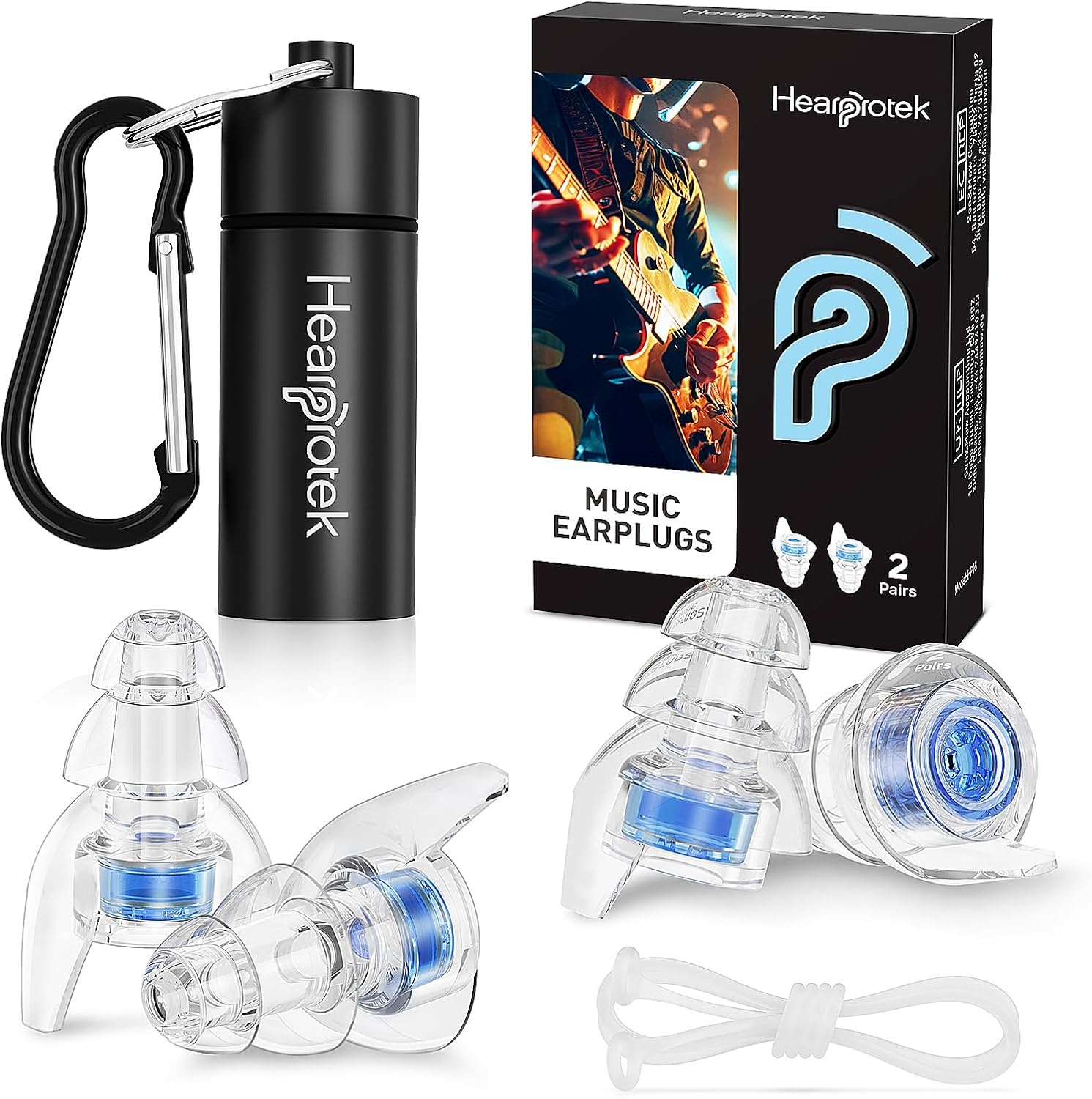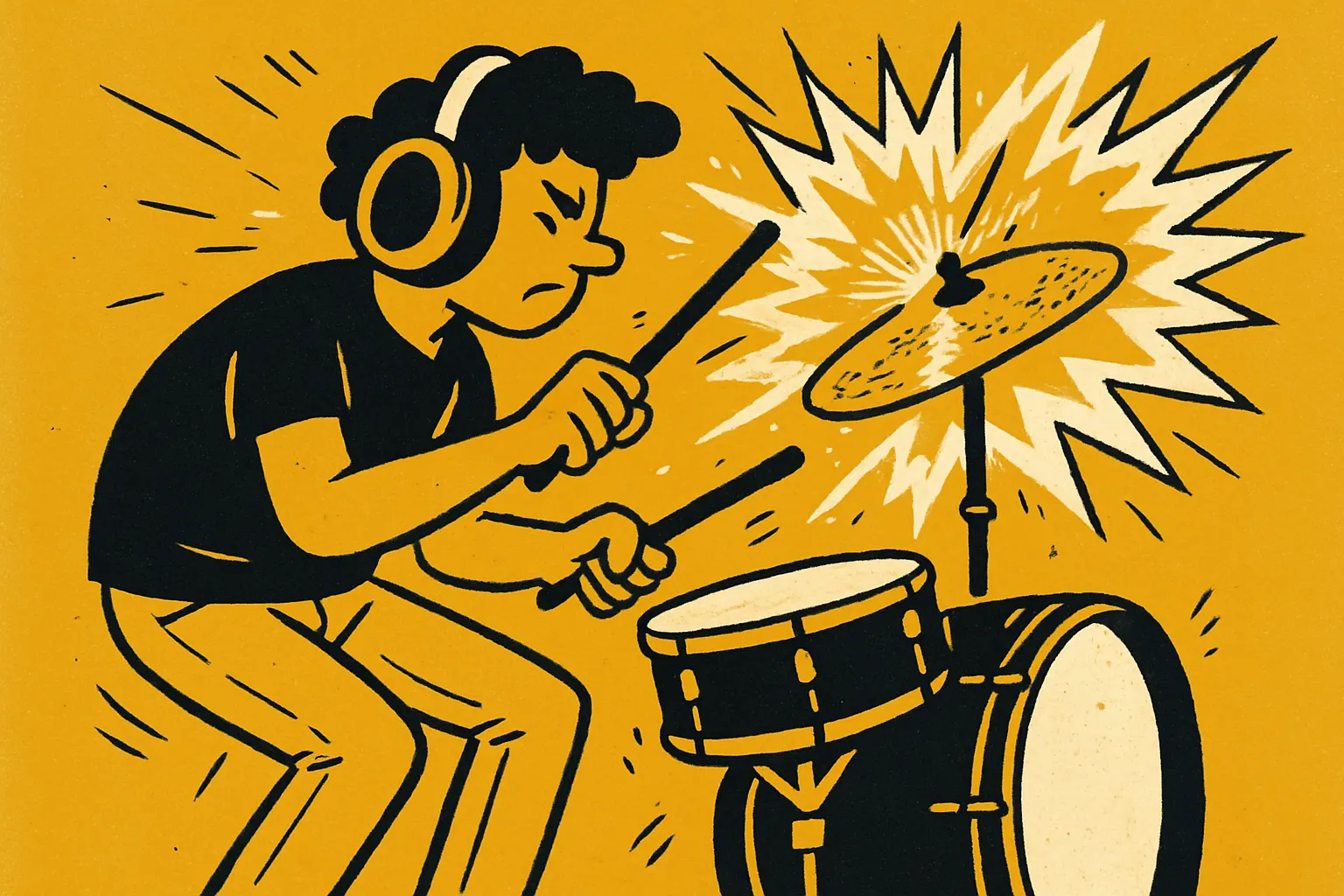
An acoustic drum kit is loud enough, up close, for long enough, that it's worth protecting your ears from your very first practice session — not once you notice a problem. The simplest fix is a pair of musician's earplugs that turn the volume down evenly without making everything sound muffled, worn every time you sit down to play. Foam earplugs from a hardware store work in a pinch, but they cut high frequencies more than low ones, so the kit ends up sounding dull and boxy instead of just quieter.
You don't need to be loud, fast, or "good enough to count" for this to matter. If you're hitting drums, this page applies to you.
Why This Matters From Day One
Hearing changes from loud noise build up gradually, and they don't reverse. That's the annoying part — there's no moment where it suddenly feels urgent, so it's easy to keep putting it off. Wearing protection from your first week is a habit, not a reaction to a problem you've already noticed. It costs you a few seconds before you sit down, and it's a lot cheaper than any regret later.
Small rooms make this worse, not better. In a bedroom or basement, sound has nowhere to go — it bounces off walls back at your head, so the drums feel and sound louder than the same kit would in a big room or outdoors.
What Actually Matters (and What Doesn't)
Matters:
- Even reduction across frequencies. Look for plugs marketed for musicians rather than generic "noise reduction" foam. The goal is turning the whole mix down evenly, not just cutting the harsh top end.
- A snug, comfortable fit. Protection you keep taking out because it hurts after twenty minutes isn't protection.
- Reduction level appropriate for drumming, not for a construction site — you still want to hear the kit, your metronome, and yourself.
Doesn't matter:
- Brand name or color.
- Whether they're the same plugs a touring drummer uses. Fit and consistent use matter more than the label.
See our best ear plugs for drummers for specific picks at a beginner budget.
Types of Hearing Protection
- Foam earplugs — cheap, disposable, widely available. Better than nothing, but they muffle the sound unevenly, which makes it harder to hear your own timing clearly.
- Musician's earplugs (filtered) — reusable, designed to lower volume while keeping the sound relatively natural. This is a sensible default for beginners.
- Custom-molded plugs — fitted to your ears, more comfortable for long sessions, but a bigger upfront cost that isn't necessary when you're just starting out.
- Electronic kit + headphones — if you're practicing on an electronic drum set, you control the volume directly through a good pair of headphones for electronic drums. This sidesteps the acoustic-kit volume problem entirely, though it introduces a new one: it's easy to crank headphone volume up to hear yourself over the pads, which can be just as loud into your ears as the drums would have been.
How Loud Is a Drum Kit, Really
An acoustic kit played at normal practice volume is loud — comparable to standing near power tools or a loud motorcycle. Cymbals in particular produce sharp, high-volume transients right near your head. You don't need a decibel meter to know this; if your ears feel dull or ringing after a session, that's your body telling you the volume was too high for too long without protection.
When You Can Skip It
You can reasonably skip hearing protection when:
- You're practicing on a practice pad — the volume is low enough that it's not a concern.
- You're on an electronic kit at a genuinely low headphone volume, and you've deliberately kept it that way rather than turning it up to compensate for a loud room.
You should not skip it for a normal acoustic session, even a short one, even if you're only working on basics like sticking patterns with a pair of beginner drum sticks at your practice pad or full kit.
What Won't Help
- Playing softer instead. It reduces some volume, but cymbals and rim shots still spike loud regardless of how gently you're trying to play overall.
- Cotton balls or tissue in your ears. These barely reduce volume and give a false sense of protection.
- "Getting used to it." Your ears adapting to feeling normal after loud exposure isn't the same as the exposure being fine.
Building the Habit
Keep your earplugs wherever you keep your sticks, so putting them in becomes as automatic as picking up your drum sticks or sitting on your throne. The goal isn't perfection — it's consistency. A cheap pair worn every session beats an expensive pair you forget half the time.