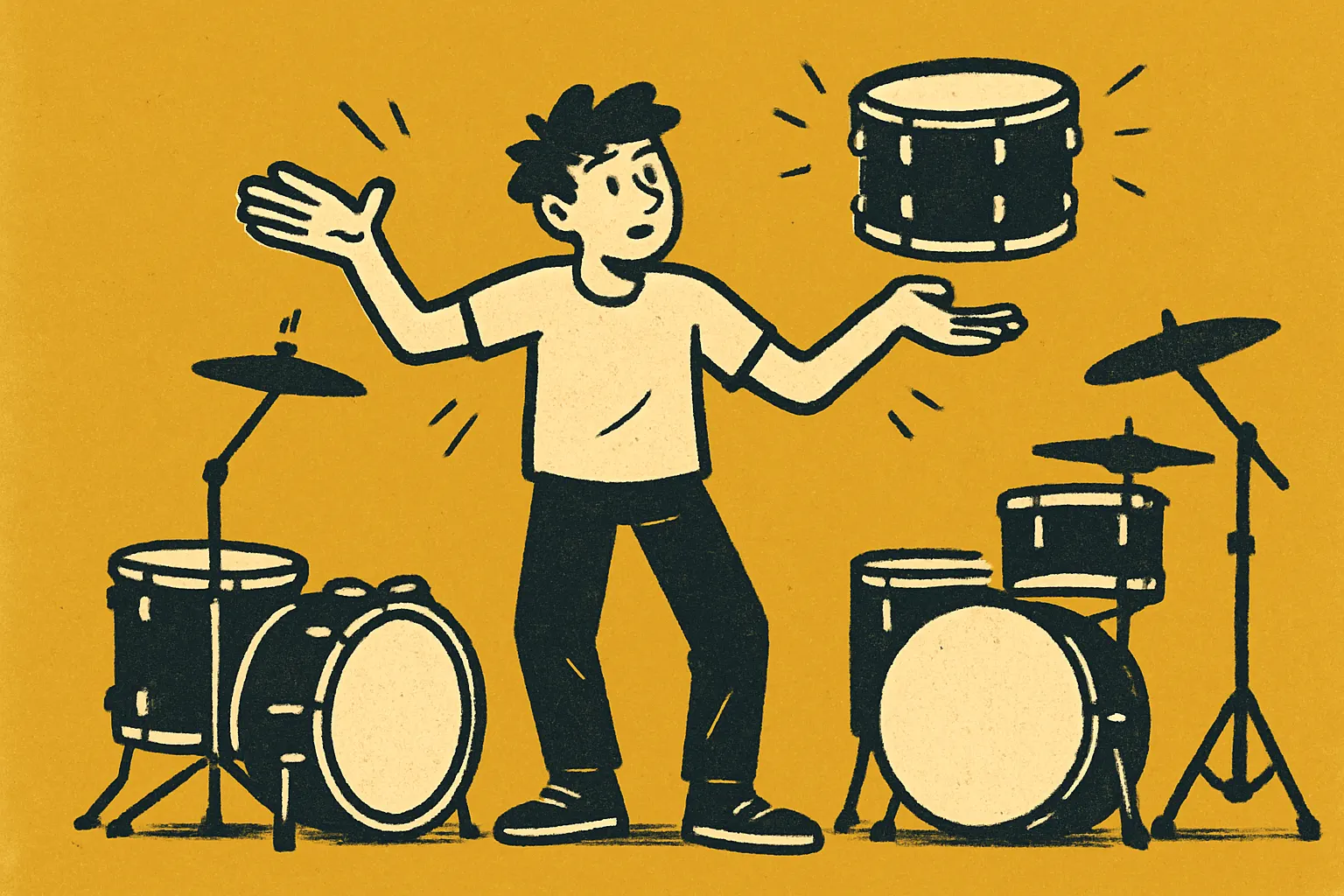
The only real difference: toms
Strip away the marketing and it comes down to this: more toms, more tone options, more hardware to manage. Everything else — the snare, the kick, the cymbals you add — is the same regardless of which configuration you buy.
4-piece: kick, snare, one rack tom, one floor tom. 5-piece: kick, snare, two rack toms, one floor tom.
Some kits go further (6-piece, 7-piece), but those extra toms matter more for specific styles than for someone just starting out.
Why some beginners like the 4-piece
Fewer drums means less to set up and tear down, which matters if you're assembling and breaking down your kit every practice session. It also means fewer surfaces to think about while you're still learning where your hands and feet go — some beginners find it easier to lock in basic technique on a simpler kit before adding more drums into the mix. And if space or transport is tight, a 4-piece simply takes up less room.
The trade-off: with only one rack tom, you have less room to rearrange drums and cymbals around your setup compared to a 5-piece.
Why some beginners like the 5-piece
The second rack tom gives you more tonal variety when you start building fills, and some drummers find a 5-piece easier to arrange and move around once they know how they like their setup laid out. It's a more