What the Numbers and Letters Actually Mean
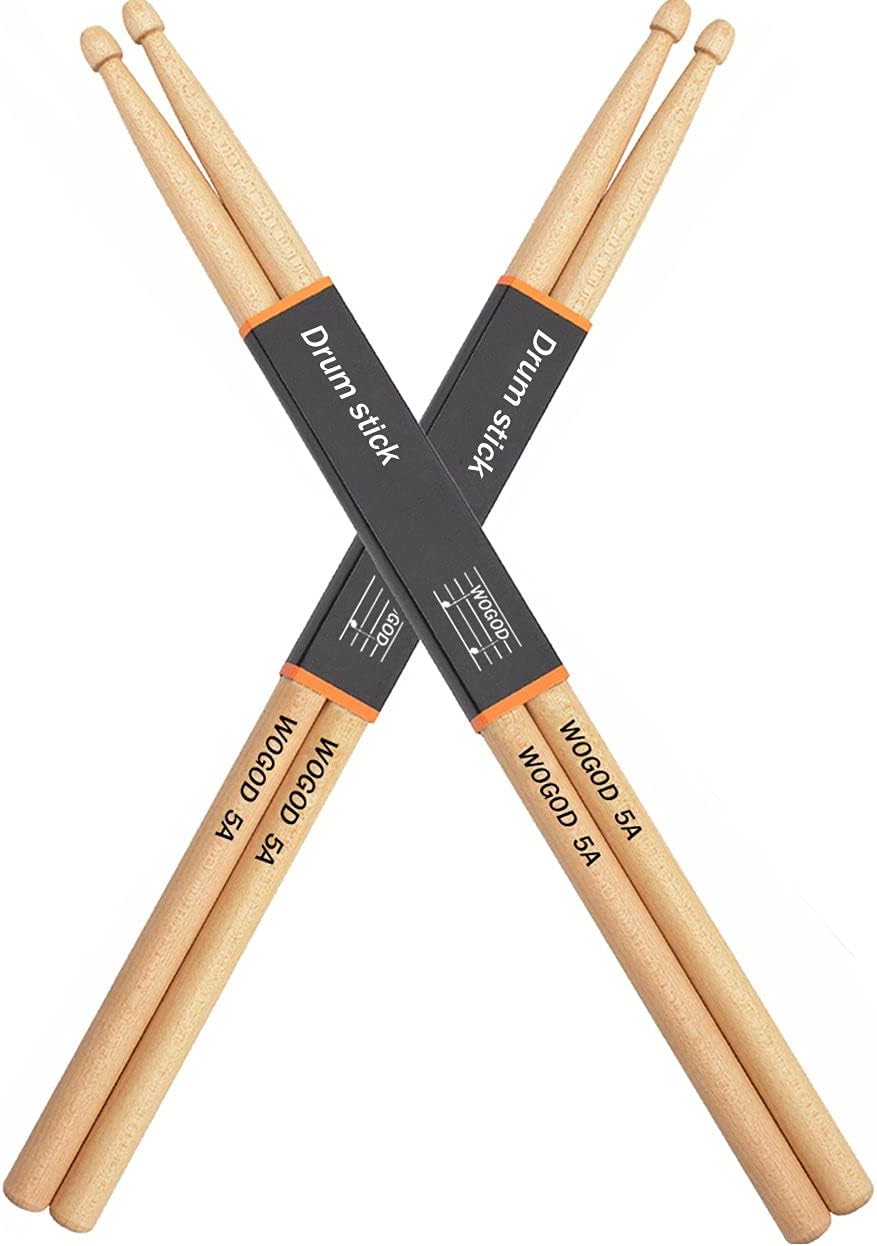
The naming system on drumsticks — 5A, 5B, 7A, and so on — comes from a system manufacturers set up to describe a stick's diameter and length. The number relates to thickness: a higher number generally means a lighter, thinner stick. So a 7A stick is thinner and lighter than a 5A, which is thinner than a 5B.
The letter (A or B) is a bit more historical than functional today. Don't worry too much about decoding it — just know that when people say "5A vs 5B," they're really talking about a difference in thickness and weight, not two totally different categories of stick.
The Real Difference: Thickness and Weight
Between 5A and 5B, the core difference is thickness. 5B sticks are noticeably thicker in diameter than 5A sticks, and that extra thickness makes them heavier overall. As one common reference point, a typical 5B measures around .550 inches (1.4 cm) thick and 16.25 inches (41.3 cm) long — slightly thicker and a touch longer than a standard 5A.
That weight difference is what you actually feel in your hand:
| Stick | Thickness | Weight | Control | Volume |
|---|---|---|---|---|
| 5A | Thinner | Lighter | Easier to move quickly and quietly | Lower |
| 5B | Thicker | Heavier | Takes more effort to control at speed | More volume per hit |
- 5A — thinner, lighter, easier to move quickly and quietly.
- 5B — thicker, heavier, gives you more volume per hit but takes more effort to control at speed.
Why 5A Tends to Work Better When You're Starting Out
When you're new, a lot of your practice time goes into basic control — hitting the drum where you mean to, keeping a steady grip, not tensing up your hands. A lighter stick makes that easier because you're not fighting the extra weight while you're also learning the motion itself.
This is also why 5A shows up so often as a comfortable, durable option for general playing across styles — it's a stick that doesn't ask much of you before you've built any technique yet. If you're practicing quietly on a practice pad or on an electronic drum set, the difference in volume between 5A and 5B matters less anyway, so lighter and easier to control is the more useful trade.
When 5B Makes More Sense
5B earns its reputation in louder, heavier styles. The thicker profile is good at pulling louder tones out of acoustic drums, which is part of why it's associated with genres like hard rock and metal. If you already know you're aiming for that kind of playing, or you're drawn to hitting harder and want the stick to hold up to it, 5B is a reasonable choice even early on.
The trade-off is that 5B's extra power and durability come with less nimbleness — it can feel heavier and slower to move around the kit compared to 5A, especially before your hands have built up strength and control.
So Which One Should You Actually Buy?
If you're not sure yet what style you'll gravitate toward, 5A is the lower-friction starting point — lighter, easier to control, and versatile enough to work across a lot of beginner practice. If you already know you want to play loud, aggressive music, or you've tried 5A and found it feels too light or flimsy in your hand, 5B is worth trying.
A lot of this really does come down to personal feel once you get past the basics. Some drummers try both and end up preferring 5B's slightly thicker, longer feel even outside of loud genres — there's nothing wrong with that. The numbers are a starting guide, not a rule you have to follow forever.
A Simple Way to Decide
If you can, hold both in a store or borrow a pair from someone before buying. Pay attention to:
- Grip comfort — does the thickness feel natural in your hand, or awkward?
- Control — can you tap out a simple steady beat without your wrist tiring quickly?
- Volume needs — are you practicing quietly at home, or playing along with a loud band?
If you can't try before you buy, default to 5A. It's the more forgiving choice while you're building basic hand control, and it's cheap enough that switching to 5B later isn't a big loss.
Common Mistakes
- Buying 5B because it "looks more serious." Thickness doesn't make you a better drummer — it just changes how much effort a hit takes.
- Assuming the letter (A vs B) tells you something important. For 5A vs 5B, the number and the resulting thickness/weight is what actually matters day to day.
- Sticking with a size that hurts your hands. If a stick feels like it's straining your grip during normal practice, that's a sign to try the other size, not to push through it.
- Ignoring genre entirely. If you already know you want to play something loud and heavy, it's fine to start with 5B instead of working your way up from 5A.