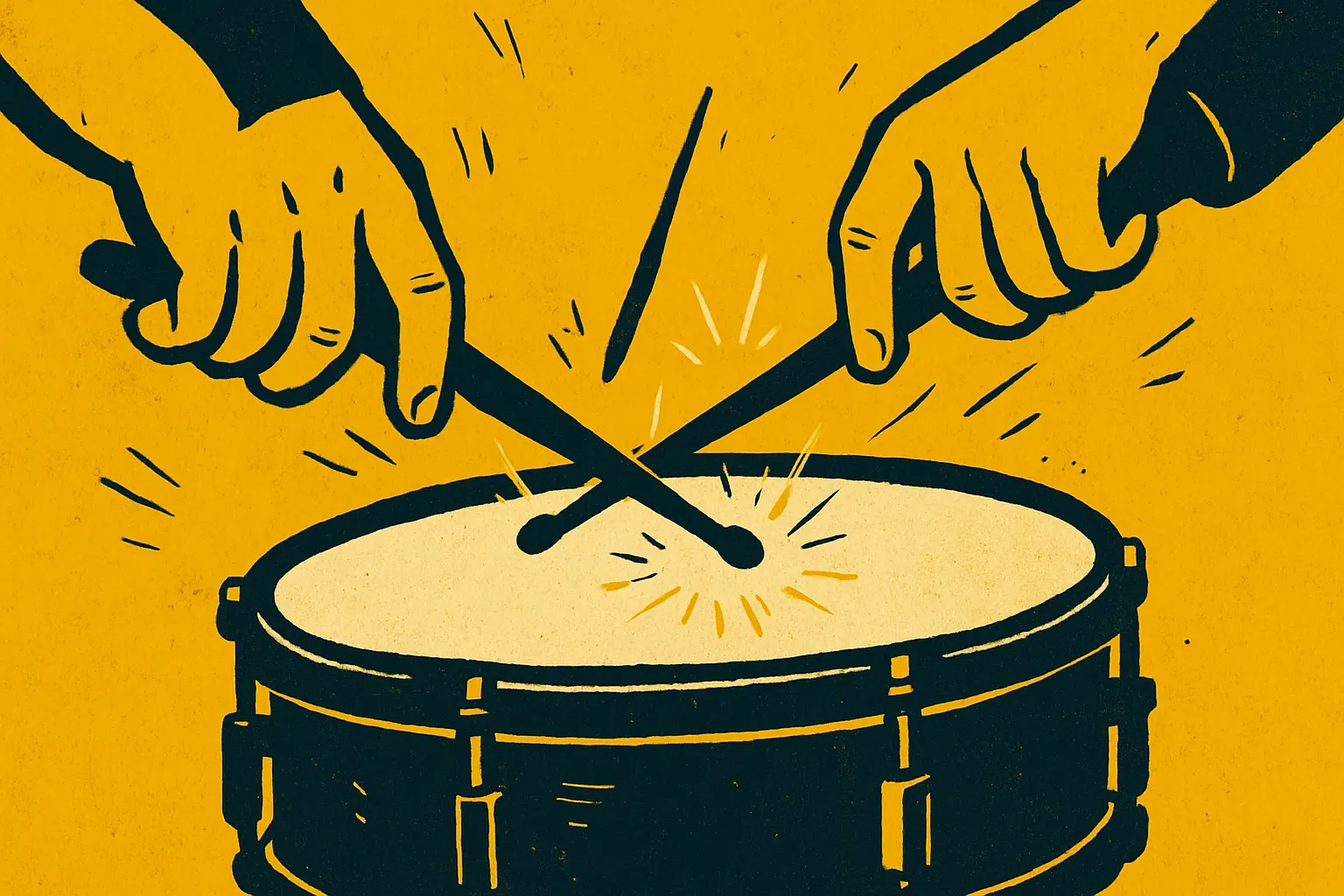
You play the snare by holding a stick in each hand with a relaxed grip, sitting so the drum is roughly at hip height, and striking the head near the center with a wrist motion that lets the stick bounce back off the head. Before any of that, the drum has to be set up and tuned, and you need to pick a grip. Get those basics right first — technique on top of a bad setup just teaches you bad habits.
Set Up and Tune the Drum First
A lot of beginners skip straight to hitting the drum and skip the boring part: setup and tuning. But the order matters. Set the snare drum on its stand (or use a practice pad if you don't have a full kit yet), adjust the height so the top of the head sits around your hip or belly-button level when you sit on your drum throne, and tilt it slightly toward you. Then tune it — tighten the tension rods evenly around the rim until the head sounds consistent from lug to lug, not baggy or choked. A poorly tuned or badly positioned drum makes even correct technique feel and sound wrong, so this comes before you touch technique.
Pick a Grip: Matched or Traditional
Beginners generally choose between two ways of holding the sticks:
- Matched grip — both hands hold the stick the same way, like two hammers. This is the more common starting point and transfers directly to electronic and acoustic kits.
- Traditional grip — the left hand (for right-handed players) holds the stick underhand, resting in the crook between thumb and fingers. This grip comes from old marching and orchestral snare playing.
If you're not sure which to use, start with matched grip. It's simpler to learn and works the same for every drum in the kit, not just the snare.
Find Your Fulcrum
The fulcrum is the pivot point where the stick balances in your hand — often between your thumb and the first knuckle of your index finger, about a third of the way up from the butt end of the stick. Your other fingers curl loosely around the stick to guide it, not squeeze it. Grip tension matters here: hold too tight and the stick can't bounce back on its own, so every note becomes a muscled push instead of a natural rebound; hold too loose and you lose control of where the stick goes. Aim for something in between — firm enough to steer, relaxed enough to let the wood do some of the work.
Where to Strike the Head
Basic strokes near the center of the batter head (the top head you hit) tend to give a fuller, more even snare sound. Moving the stick toward the edge changes the tone — thinner and higher-pitched — which some patterns use on purpose, but as a beginner, center strikes are your default until a specific pattern tells you otherwise. Keep your strike point consistent; jumping around the head without meaning to is one reason a beginner's sound can feel inconsistent from hit to hit.
The Stroke: Let the Stick Bounce
The motion itself is mostly wrist, not arm. Lift the stick with a small wrist flick, let it fall into the head, and instead of pulling it back up yourself, let the head's rebound bring the stick back toward its starting position. Your hand catches and controls that bounce rather than fighting it. This motion underlies much of the snare drum technique you'll build later, so it's worth spending real practice time on just this — no pattern, no song, just single strokes, letting the stick rebound cleanly.
Practice Without a Full Kit
You don't need a snare drum to work on grip, fulcrum, and stroke. A practice pad paired with a decent pair of drum sticks is enough to build the motion, and it's much quieter — useful if you're practicing at odd hours or in an apartment. Play-along videos built specifically for practice pad work exist for exactly this reason: you can drill the stroke and basic rhythms before you ever sit at a full drum. If noise is a concern beyond the pad itself, a pair of ear plugs protects your hearing once you do move to a full kit.
Common Mistakes to Watch For
- Gripping too tight. This kills the rebound and makes your hands tire fast.
- Skipping tuning. A poorly tuned drum makes it hard to tell if a bad sound is your technique or the drum itself.
- Striking randomly around the head. Stick to center strikes while you're building the basic stroke.
- Using arm instead of wrist. Big arm swings for every note wear you out and slow you down.
- Ignoring drum height. A drum set too high or too low forces awkward wrist angles that fight the natural stroke.
What to Practice First
Start with single strokes — right, left, right, left — at a slow, steady pace, focused only on a clean rebound and a relaxed fulcrum. Once that feels steady, add basic rhythms at a comfortable tempo before worrying about speed or fancier patterns like rolls. There's no need to rush this stage; the stroke you build now is the foundation for everything else you'll play on the snare.