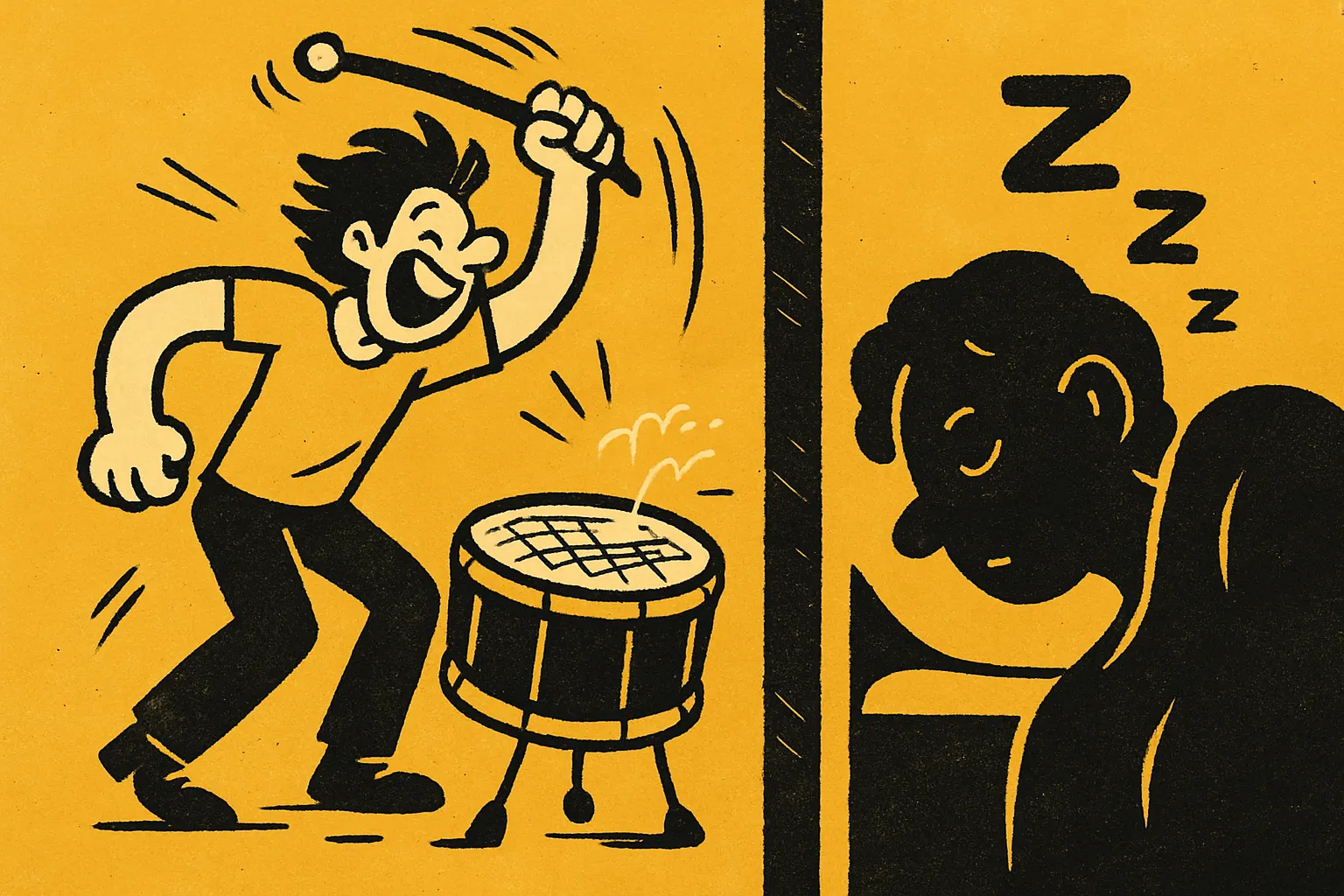
What a mesh head actually is
Instead of a solid plastic film (like a normal drum head), a mesh head is a tightly woven mesh screen stretched over a hoop. Because it's mesh, air passes through it and there's no drum shell underneath amplifying the hit, so the sound that comes off the head itself is mostly a soft tap rather than a boom. On an electronic kit, a sensor under the head picks up the hit and turns it into sound through headphones or a module — the mesh is just the surface you're playing on, not the thing making the sound you hear.
This is the key shift to understand: mesh heads aren't designed to sound like a drum. They're designed to feel like one while staying quiet, so the feel and the durability of the mesh are what manufacturers focus on, not tone.
Why mesh heads feel closer to a real drum than a rubber pad
If you've played a rubber-topped pad, you know it can feel dead and bouncy in a way that doesn't match an acoustic snare or tom. Mesh heads exist to close that gap. The weave gives some give when a stick lands, then some rebound back — closer to the response of a real batter head than a solid rubber surface. This matters for practice because your hands are learning real stick control, not just muscle memory for a pad that behaves differently from an actual kit.
1-ply, 2-ply, and 3-ply — what the difference feels like
Mesh heads come in a few thicknesses, described by how many layers of mesh are woven together:
| Ply | Feel/Rebound | Noise Level |
|---|---|---|
| 1-ply | Less "real drum" feel and rebound | Generally quieter |
| 2-ply | Better rebound, more accurate stick response | Middle ground |
| 3-ply | Most acoustic-like feel | May sit a bit louder |
- 1-ply — thinner and generally quieter, but less "real drum" feel and rebound.
- 2-ply — the common middle ground. It tends to give better rebound and a more accurate feel for stick response, which is one reason double-ply mesh is often used as the default on electronic drum pads.
- 3-ply — thicker still, aimed at players who want the most acoustic-like feel and are willing to accept it may sit a bit louder than a 1-ply head.
There's a real trade-off here: more plies generally means more feel but a bit more noise, since a tighter, thicker weave has more surface to strike. If your top priority is silence, a thinner mesh may suit you better. If your top priority is technique carrying over to an acoustic kit, a 2-ply is a reasonable default and a common choice among players.
What mesh heads won't fix
Mesh heads quiet down the head itself, but they don't remove every noise source on an electronic kit. The kick pedal beater still strikes a surface, the pedal hardware still clicks, and the whole kit still transmits some vibration into the floor when you're playing — especially the bass drum pedal, which is worth thinking about separately (see our guide to bass drum pedals). If floor vibration is your actual complaint from neighbors below you, a mesh head upgrade alone won't solve it — an anti-vibration mat or riser under the kit addresses that part instead.
Where you'll find mesh heads
Many beginners meet mesh heads in one of two places: as the pads on an electronic drum kit, or as a low-volume swap for a practice pad. Some practice pads use mesh surfaces for the same feel-over-sound reason electronic kits do, so if you're comparing options, our practice pad guide covers both mesh and rubber surfaces and who each suits.
The honest trade-off
Mesh heads are one of the better tools for quiet practice because they let you play with real stick technique without a drum shell's boom underneath. What they can't do is turn a full kit into something silent — pedal clatter and floor vibration are separate problems with separate fixes. Treat mesh heads as solving the "the drum itself is too loud" part of apartment drumming, not the whole picture.
