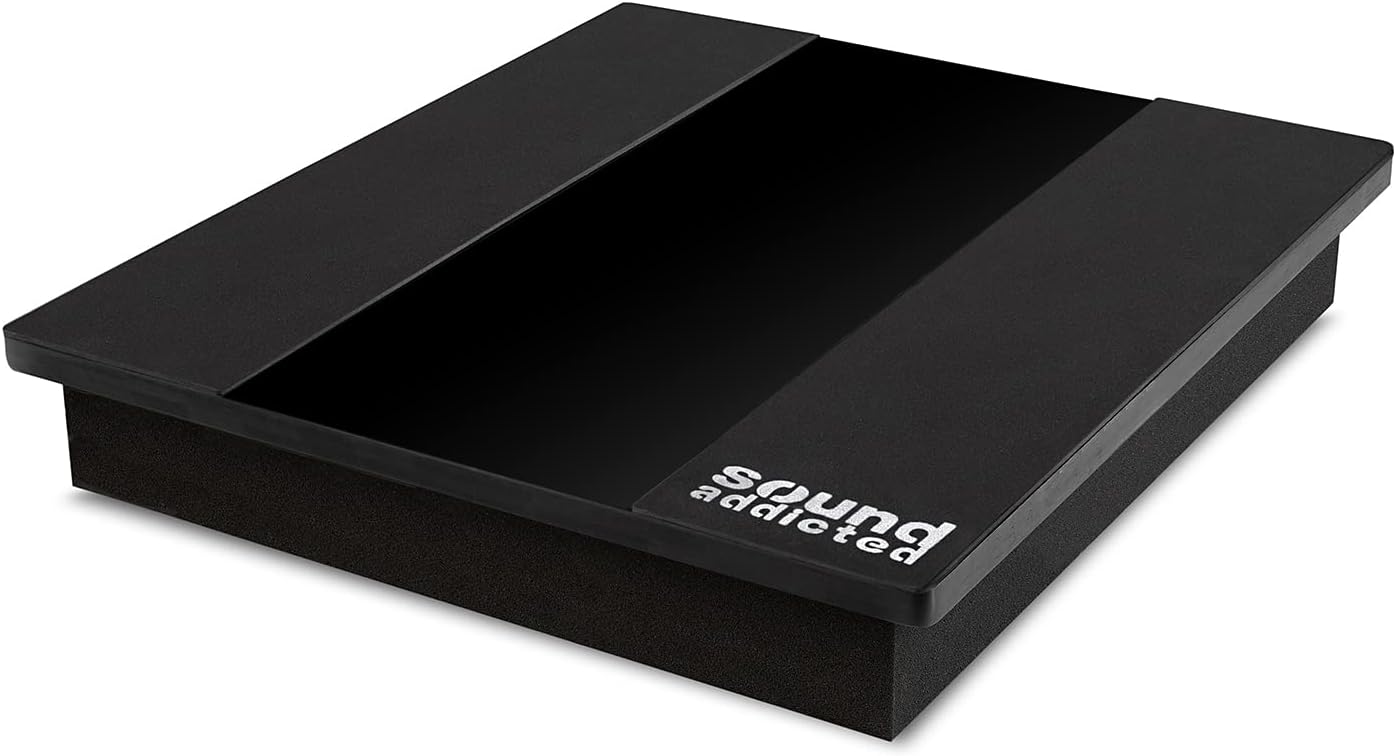
The quietest way to practice drums is an electronic drum set with headphones, or a practice pad if you just need to work on stick technique. Add an anti-vibration mat under your setup to cut down the thumping that travels through the floor, and keep a pair of ear plugs nearby so you don't push headphone volume too high.
None of this makes drums completely silent. You're still hitting things with sticks. But it gets you close enough that you can practice in an apartment, late at night, or around people who are sleeping or working.
Electronic Kit vs. Practice Pad — Pick Based on What You're Working On
These solve different problems, and a lot of beginners end up with both eventually.
A practice pad is a rubber or mesh surface that mimics a drum's feel but makes almost no sound. It's the cheapest, smallest, and quietest option. Use it for stick control, rudiments, and hand technique — anything that doesn't need a full kit layout. It won't teach you coordination between your hands and feet, since it's just one surface.
An electronic drum kit gives you a full set of pads and cymbals wired to a sound module, so you can play real songs and full grooves — kick, snare, hi-hat, toms — while the actual sound only comes through headphones or speakers. This is the closer stand-in for a real kit if you want to practice everything, not just hand technique.
If you're deciding between the two, think about what you're missing right now. Struggling with basic stick control and rudiments? Start with a pad. Need to work on full-kit coordination and playing along to songs? An electronic kit gets you there, even if it costs more.
Headphones Are the Real Reason This Works
Headphones let you hear your own playing clearly while the room around you stays quiet — no amp, no drum shell resonance, nobody outside your headphones hearing what you're doing. This is what actually makes late-night or apartment practice possible: you get full-volume feedback in your ears without full-volume sound leaving the room.
Any decent pair works, but headphones built for electronic drums tend to isolate outside noise better and hold up to longer sessions, since they're made to be worn while you're moving and sweating, not just sitting still.
Cutting Down Vibration and Impact Noise
Headphones handle the sound of your playing. They don't handle the vibration — the thump of a kick pedal or your feet hitting the floor, which travels through the floor into the room below or next door far more than it travels through the air.
An anti-vibration mat or riser placed under your kit, throne, and pedal absorbs a lot of that impact before it reaches the floor. It's an upgrade that beginners in apartments often skip and then regret once a neighbor knocks on the door.
Your bass drum pedal is often the loudest single source of that impact noise, since it's a foot slamming a beater into a hard surface (or an electronic pad) over and over. Placing it on a mat, rather than bare floor, makes a noticeable difference.
Protecting Your Hearing When Things Get Quiet
It sounds backwards, but quiet practice setups can still damage your hearing. Once you're wearing headphones, it's easy to keep turning the volume up to hear yourself better over your own playing — and that volume is going straight into your ears at close range. A pair of ear plugs made for drummers reduces overall volume evenly, so you can keep headphone levels reasonable instead of cranking them.
What About Practicing on a Real Acoustic Kit?
An acoustic kit is hard to make truly quiet — it's a set of resonant shells and cymbals, and there's no headphone plug on it. If you already own one and can't switch to electronic, mesh or rubber practice heads on the drums and quieter cymbals (or cymbal mutes) reduce volume, and a mat underneath still helps with vibration. But if quiet practice is your main goal, an electronic kit or a pad will get you further with less compromise.
A Basic Quiet Practice Setup for a Beginner
If you're starting from nothing, here's a simple order to build toward:
- A pair of sticks and a practice pad — covers hand technique almost silently.
- A comfortable throne — you'll practice longer and more consistently if you're not perched on something uncomfortable.
- Headphones — needed the moment you move to an electronic kit or add playback for playing along to songs.
- An electronic drum kit — once you're ready to work on full-kit coordination.
- An anti-vibration mat — placed under the whole setup, especially in an apartment.
- Ear plugs — once you're regularly practicing with headphones at real volume.
You don't need all of this on day one. A pad and a decent pair of headphones will get many beginners through their first few months.
Common Mistakes
- Skipping the mat and blaming the kit. A lot of neighbor complaints trace back to floor vibration from the kick pedal and your feet, not the sound itself — a mat solves more of this than people expect.
- Turning headphone volume up instead of down. If you can't hear yourself clearly, check your playing technique or headphone fit before cranking the volume.
- Buying a full acoustic kit first because it feels more "real." If quiet practice is the priority, an electronic kit or pad gets you playing sooner without the noise conversation.
- Ignoring hearing protection because it's already quiet. "Quiet for the room" and "quiet for your ears" are two different things.