How They Actually Make Sound
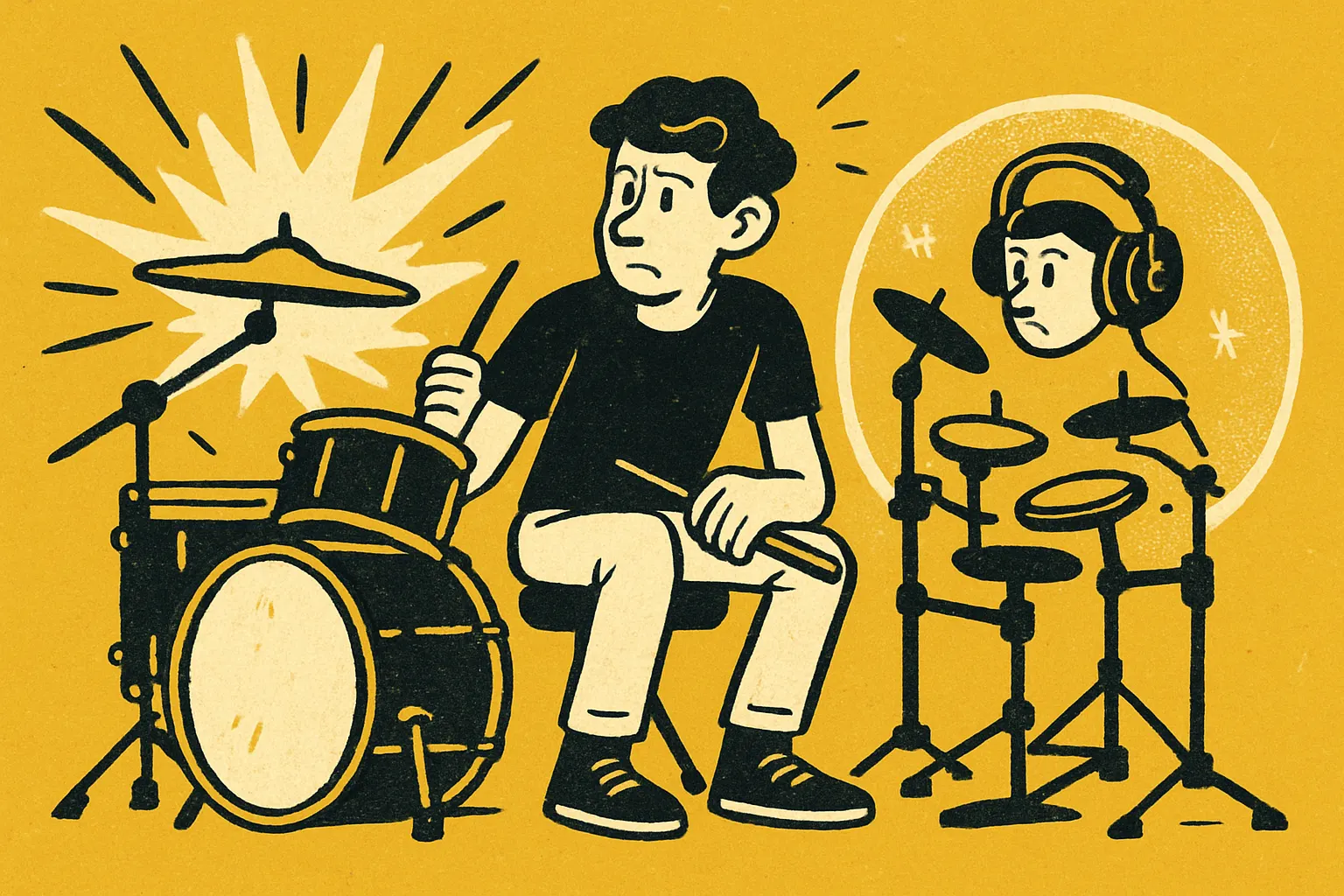
The core difference is simple: acoustic drums make sound the old way — a stick hits a skin, the skin vibrates, and that vibration is the sound. An electronic kit works differently. Each pad has a trigger that sends a signal to a small computer (the "module"), and the module plays a sampled drum sound through speakers or headphones. You're not hearing the pad itself — you're hearing a recording of a drum, triggered by your hit.
Layout Is (Almost) the Same
An electronic drum kit is really just a set of sample pads arranged in the same layout as an acoustic kit — kick, snare, hi-hat, toms, cymbals, all in roughly the same spots. That's good news if you're worried about learning the "wrong" thing. The hand positions, foot patterns, and stick control you build on an electronic kit transfer over if you move to acoustic drums later, and vice versa.
Why Space and Noise Push People Toward Electronic
Electronic kits are a practical option when a full acoustic setup isn't realistic — thin apartment walls, close neighbors, or just not enough room. You can plug in headphones and practice without the sound leaving the room. The trade-off is that electronic kits need power to work at all; unplug the module and you get silence, whereas acoustic drums make sound with zero electricity. If you go electronic, a decent pair of headphones for electronic drums makes a real difference in how the kit actually sounds to you. If you end up on acoustic drums in a shared building, ear plugs and an anti-vibration mat are the more relevant fixes.
What It Feels Like Under Your Hands
Electronic pads tend to have more rebound (bounce-back) than acoustic drum heads, and some beginners actually find that easier to control at first — the stick comes back to you more predictably. But acoustic drums offer a much wider range of dynamics: you can go from a whisper-quiet ghost note to a full crack, and everything in between, in a way that's harder to replicate on a pad. One way to think about the difference: playing acoustic drums is closer to talking naturally, where your volume and tone shift moment to moment. Playing electronic drums is closer to pressing play on a recording of your voice — more consistent, but less expressive.
Neither of these is a dealbreaker for a beginner. You'll still build timing, coordination, and reading skills on either kit. It just means the feel of your playing will differ a little depending on which one you're using.
What Doesn't Change Between Them
A few things stay the same no matter which kit you choose:
- Sticks — the same pair works on both acoustic drums and most electronic pads. See our beginner drum sticks guide if you haven't picked a pair yet.
- Seating — you'll want a stable drum throne either way; posture and reach matter regardless of what's making the sound.
- Foot technique — kick drum coordination is worked the same way, and a solid bass drum pedal matters whether it's triggering a real bass drum or an electronic pad.
Making the Call
There's no single right answer here — it depends on your space, your neighbors, and what you want practice to feel like. If you already know you need to keep things quiet, look at our guide to electronic drum sets for beginners. If noise and space aren't a constraint, acoustic drums give you the fuller dynamic range and the more natural feel described above. Either way, the coordination and timing work you do now will transfer if you switch kits later.

