Who This Is For
This page is for anyone who wants to practice hand technique — grip, stick control, basic rudiments — without setting up a full kit or bothering the neighbors. A practice pad doesn't replace a drum set, but it's one of the cheapest ways to put in reps on your hands when you can't play loud or don't have a kit yet.
What Actually Matters in a Practice Pad
Strip away the marketing and a few things actually change how a pad feels and how useful it is:
- Surface material. Rubber pads (like the Single-Sided line) give a fairly consistent, quiet bounce. Silicone surfaces, used on the Heavy Hitter Stockpad, tend to feel a bit different under the stick — some drummers prefer the extra grip.
- One surface or two. A single-sided pad is simpler and cheaper. A double-sided pad gives you a second feel — useful if you want one side softer for long warmups and one side firmer for building control — but it costs more.
- Size. A 6-inch pad is easy to toss in a bag; a 12-inch pad gives you more room to move around and feels closer to playing a snare or drum pad on a full electronic drum set.
- Rubber thickness. Vic Firth's newer stock pads use thicker rubber than the older slim pads, which makes them feel softer and quieter to play on — worth knowing if you've used an older Vic Firth pad and are wondering why a newer one feels different.
Vic Firth Pad Options
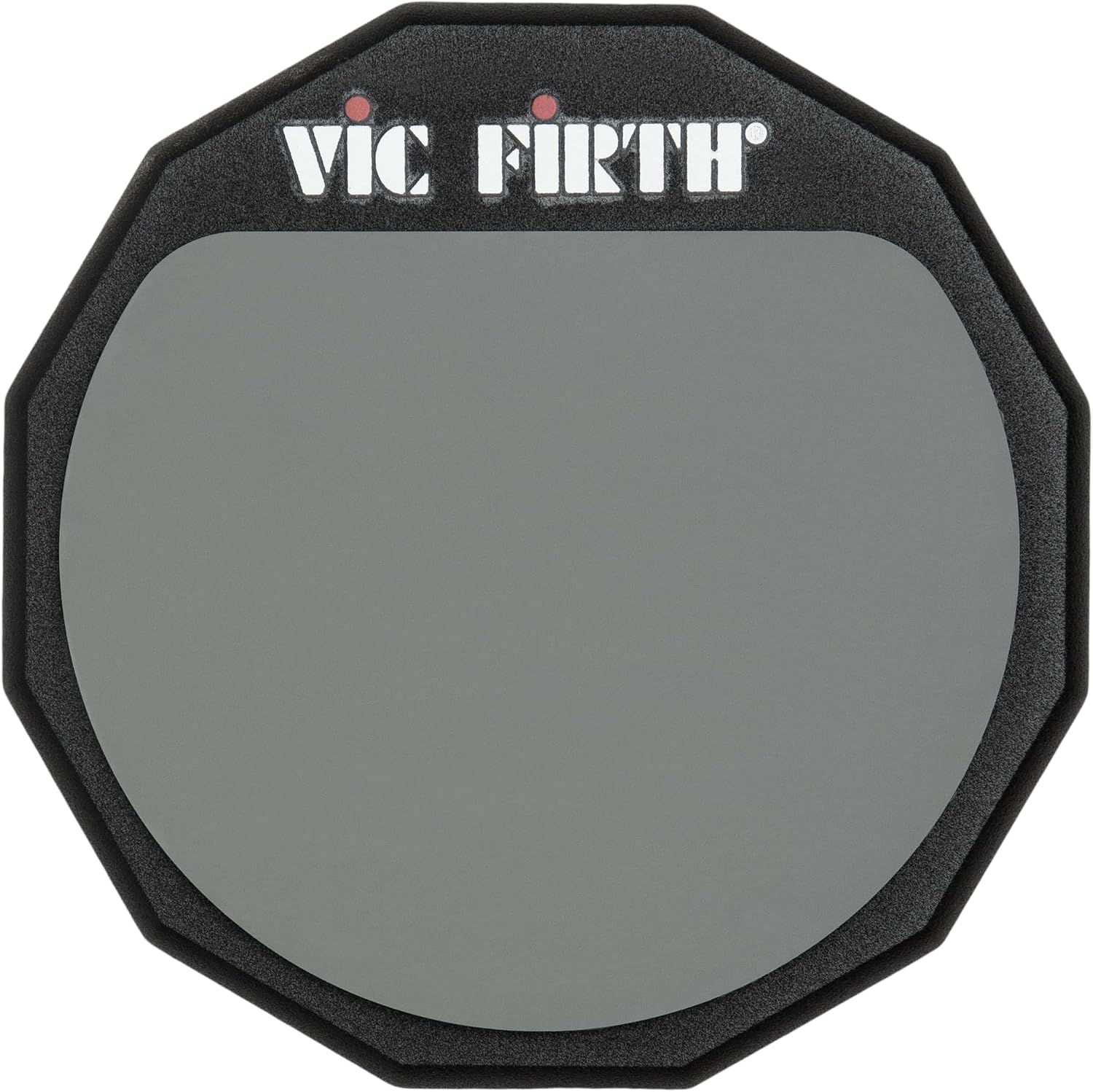
Single-Sided Practice Pads — A budget, entry-level option, with a 6-inch size available at the same price point, this is the simplest option: a portable pad with a soft rubber surface built to help you keep your hands sharp between sessions. Good default choice if you just want one pad and don't need extra features.
Double-Sided Practice Pads — These give you two playing surfaces on a single pad, priced as a mid-range option, with a 12-inch size at the premium end of that range. Worth it if you specifically want two different feels in one pad rather than buying two separate ones.
Heavy Hitter Stockpad With Rim — Has a silicone surface on one side and a non-slip surface on the reverse, plus a precut laminate insert that adds extra articulation (a sharper, more defined stick response) when you want it. It's built to be portable, so it's a solid pick if you're practicing in different places — a desk at work, a friend's place, wherever.
Heavy Hitter Quadropad With Rims (Small) — This is a much bigger investment: a larger, multi-surface pad meant for players who want more than a single small tile to practice on. This is a step up in price and size, not a beginner's first purchase — skip it until you know practicing on a pad is something you'll stick with.
PAD12D — A 12-inch rubber practice pad, useful if you specifically want a larger surface in the classic rubber feel rather than the newer thicker-rubber stock pads.
| Pad | Surface | Size | Price |
|---|---|---|---|
| Single-Sided Practice Pad | Soft rubber | 6-inch available | Budget, entry-level |
| Double-Sided Practice Pad | Two surfaces (one softer, one firmer) | Up to 12-inch | Mid-range |
| Heavy Hitter Stockpad With Rim | Silicone one side, non-slip reverse, laminate insert | Portable | — |
| Heavy Hitter Quadropad With Rims (Small) | Multi-surface | Larger | Premium |
| PAD12D | Classic rubber | 12-inch | — |
Picking Sticks to Go With It
A pad is only half the setup — you also need a pair of sticks that suit your hand size and what you're practicing. If you're not sure where to start, our guide to beginner drum sticks covers sizes and tip shapes without assuming you already know the terminology.
Trade-offs and When to Skip
If money's tight, a single 6-inch Single-Sided pad plus a basic pair of sticks covers almost everything a beginner needs for hand practice — you don't need to spend more to get useful reps in. Skip the Quadropad entirely until you've been practicing consistently for a while and know you want a bigger, multi-surface setup. And if you're mainly practicing quietly at home rather than on the go, size and surface feel matter more than portability, so don't pay extra for a travel-friendly pad you won't actually travel with.
For a side-by-side look at pads across brands, not just Vic Firth, see our best practice pads for beginners guide.