Who This Is For
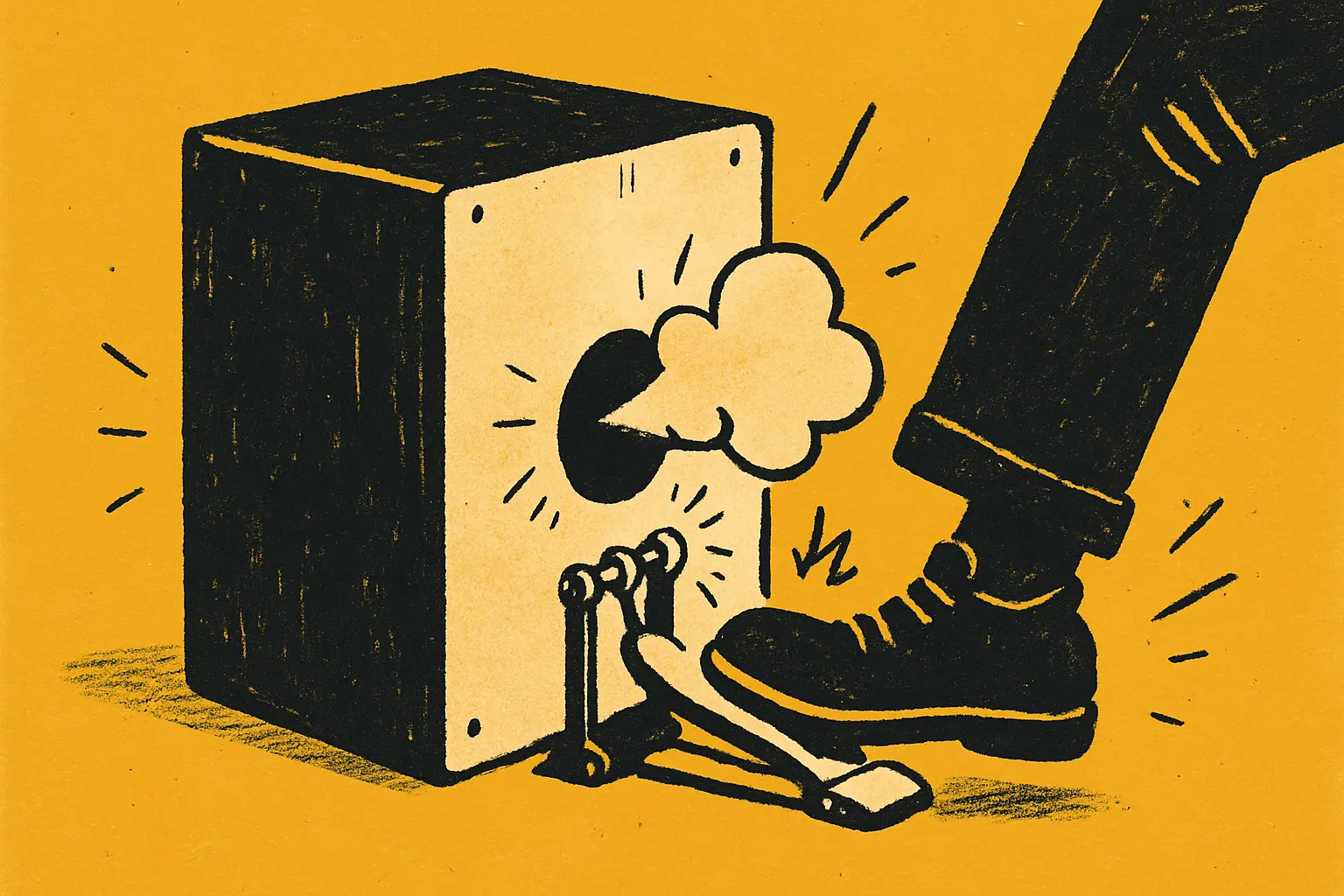
This guide is for cajon players who already have a cajon and want to add a foot-operated bass sound — buskers, worship-band players, singer-songwriters, or anyone who wants both hands free for higher percussion sounds while the pedal handles the low end. It's not about replacing a full drum kit; it's about extending what a cajon can do.
What Actually Matters
Drive type. Cajon pedals move the beater one of two ways:
- Direct link / linkage drive — a rigid rod-and-chain or rod-and-cam system connects the footboard to the beater, like the mechanism on a standard kick pedal.
- Cable drive — a flexible cable pulls the beater when you press the footboard, which tends to be lighter and simpler to mount.
Neither is objectively better for a beginner — it's a feel preference, similar to choosing a kick pedal for a regular kit.
Mount fit. Cajon pedals attach with a bracket or cradle that clamps onto the body of the cajon, not a bass drum hoop like a normal kick pedal does. Cajons vary in size and leg shape, so check that the pedal's mount is adjustable enough to fit yours.
Beater type and size. Many cajon pedals use a felt or rubber-ball style beater. Gibraltar's cajon pedals, for example, use a 6.25-inch tennis-ball-style beater, which spreads the impact and keeps the tone rounder rather than clicky.
Noise and vibration. A pedal striking your cajon on a hard floor sends more vibration through the floor than hand-playing alone. If you're in an apartment, pairing your setup with an anti-vibration mat is worth doing from day one.
Recommendations
Meinl Percussion Cajon Box Drum Pedal (TMCP) — Uses a cable-drive mechanism with a length-adjustable cradle mount designed to fit a wide range of common cajon models, and it comes with a 2-year warranty. A solid, low-fuss option if you just want something that clamps on and works.
Meinl Direct Drive Cajon Pedal — A mid-range option for a dedicated cajon pedal if you want a direct-drive feel instead of cable drive.
LP Cajon Pedal — Uses a 3-foot cable drive designed to be smooth and quiet, with adjustable spring tension and beater angle so you can dial in the feel, and a mount plate that fits many standard-size cajons. A good choice if you want to fine-tune response rather than take a one-size-fits-all pedal.
DW 5000 Direct Link Cajon Pedal — Based on the same double-pedal linkage design used in DW's regular bass drum pedals. If you already play a kit and want the cajon pedal to feel familiar under your foot, this is the closest match.
Gibraltar Cajon Drum Pedals — Come with a 6.25-inch tennis-ball style beater for a rounder low-end thump.
Dixon PP9290CP Cajon Bass Drum Pedal Plus — Can be combined with a foot-operated cymbal, letting you build a fuller foot-operated setup out of just a cajon — useful if you eventually want a hi-hat-style foot sound alongside the kick.
Trade-offs and When to Skip
"Can I just use a normal kick pedal?" This is a common question for cajon players. A standard kick pedal is built to clamp onto a bass drum hoop, not the wooden body or legs of a cajon, so it often won't mount securely without a dedicated cajon bracket. A cajon-specific pedal is designed for that mounting job and for beaters that suit a cajon's tone — that's the main reason the dedicated pedals exist instead of using a spare bass drum pedal.
Skip a pedal if you mainly play cajon solo with hand technique and don't need a foot-driven bass tone — a pedal adds mechanical noise and another thing to set up and tear down, and it changes how you sit and angle the cajon.
Cable drive vs direct link is mostly a feel choice, not a beginner-vs-advanced one — try to test either in person or read return policies carefully before buying online, since feel under the foot is hard to judge from a spec sheet alone.


