Drummer Survival

Drum Thrones for Beginners: What to Look For

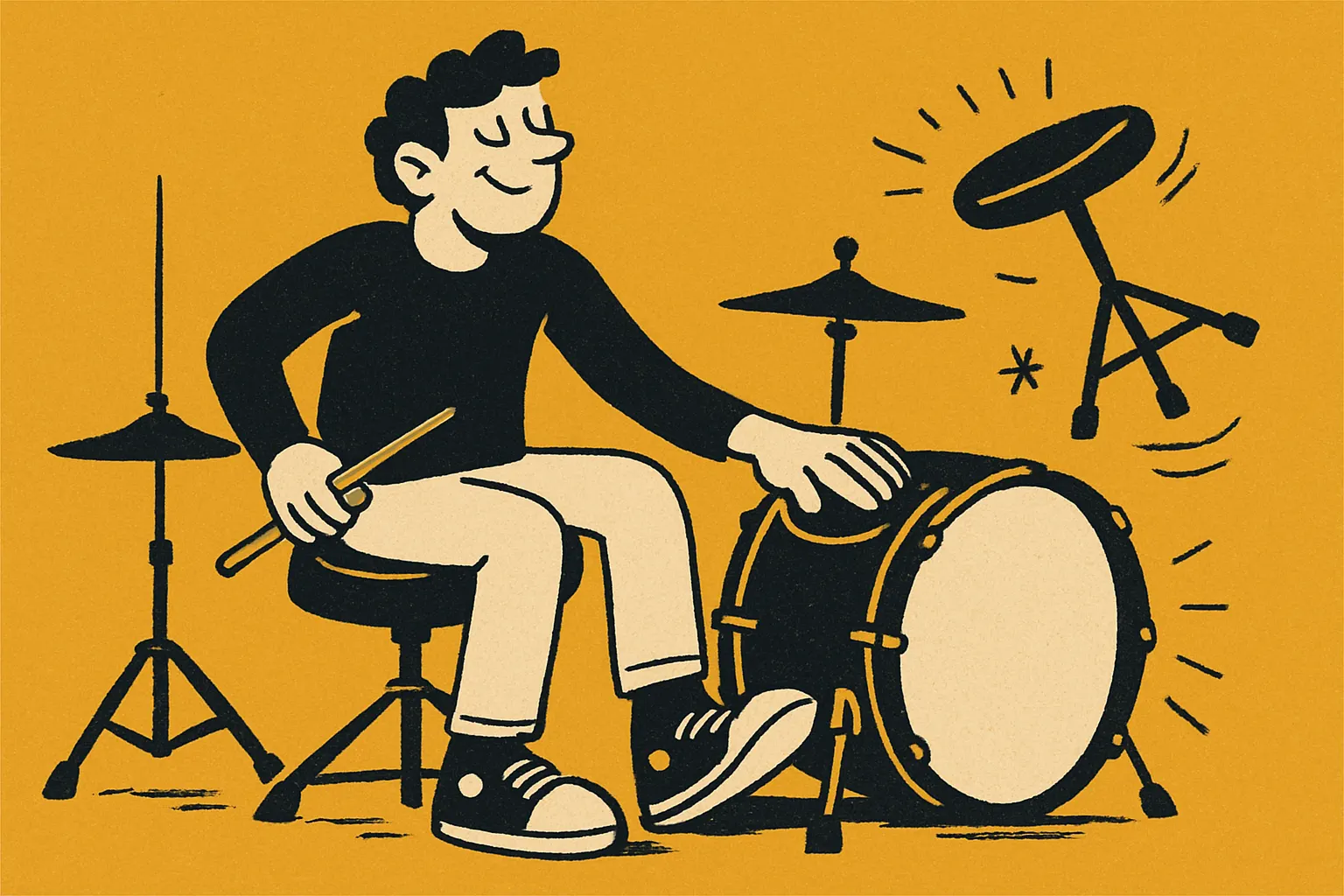
Illustration for “Drum Thrones for Beginners: What to Look For”

Look for three things: height adjustment, a stable base, and a seat shape that doesn't dig into your legs during a long practice session. Comfort on the throne affects your posture and your stamina just as much as your sticks or pad does — a wobbly or awkward seat will wear you out before the drumming does.

Who This Is For

This is for anyone still sitting on the flimsy stool that came bundled with a starter kit, or anyone shopping for their first real throne for an acoustic or electronic drum set. If your legs go numb or your back aches after twenty minutes, the throne is worth fixing before you spend more money on anything else.

What Actually Matters

Height adjustment. Your knees should sit roughly level with your hips, maybe a touch above. If the throne doesn't adjust, you'll compensate with your back and shoulders without realizing it.

Seat shape. A flat, round seat looks simple but can dig into your thighs as you rotate your legs for the kick pedal and hi-hat. Some thrones — like SoundSeat's — use a sculpted seat with cutaway areas for the legs, which gives you a better playing position and posture instead of fighting the seat's edge. Others use a motorcycle-style seat shape, which some drummers find stays comfortable through a couple hours of straight sitting.

Back support. Not every throne has one, and you don't strictly need it — but if your practice sessions run long, an adjustable back can help. Some SoundSeat models offer a medium back option alongside the standard backless throne, so you can pick based on how you sit.

Base stability. A wobbly base is distracting and, over time, can be a real annoyance mid-song. Look for a wide, heavy-duty base rather than a thin tripod that flexes when you shift your weight.

Padding firmness. This is personal. SoundSeat thrones run stiffer than the typical squishy-topped throne — some players prefer that firmness for long-term comfort, since a soft seat can compress and feel less supportive after a while. There's no universally

Frequently asked questions

Is SoundSeat a good drum throne brand?

SoundSeat makes several drum-related seats, including a standard Throne and a BreakDown Gas-Lift model. One drummer described their SoundSeat throne as stable on almost every stage and seemingly indestructible, though this varies by user.

What makes a drum throne comfortable for long practice sessions?

A seat shape that doesn't dig into your thighs, a stable base, and the right firmness for your body all matter. SoundSeat's motorcycle-style seat design is reported to stay comfortable through a couple hours of straight sitting.

Do drum thrones need back support?

Not every beginner needs one, but if you practice for long stretches, an adjustable back can help. Some SoundSeat models offer a medium back option in addition to the standard backless throne.

How do I know when to replace a drum throne?

Watch the hydraulics if your throne has a gas-lift mechanism — a common wear issue with SoundSeat thrones is that the hydraulics tend to wear out over time, which shows up as the seat slowly sinking or not holding height.

What's the difference between a standard throne and a gas-lift throne?

A gas-lift throne, like the SoundSeat BreakDown model, adjusts height with a hydraulic lift and breaks down quickly for transport, while a standard throne usually adjusts with a threaded post you twist by hand.

Are stiffer throne seats better than padded, squishy ones?

Neither is objectively better — it's a preference. SoundSeat thrones are noted as stiffer than typical squishy-topped thrones, and some drummers find that firmness more comfortable over long-term use.

Is a leather throne seat worth it?

The SoundSeat BreakDown Gas-Lift Drum Throne uses a high-quality leather seat, which can hold up well and stay comfortable, but it's one factor among seat shape, height range, and base stability — not the deciding one on its own.

More in Drum Gear

Related gear & reading