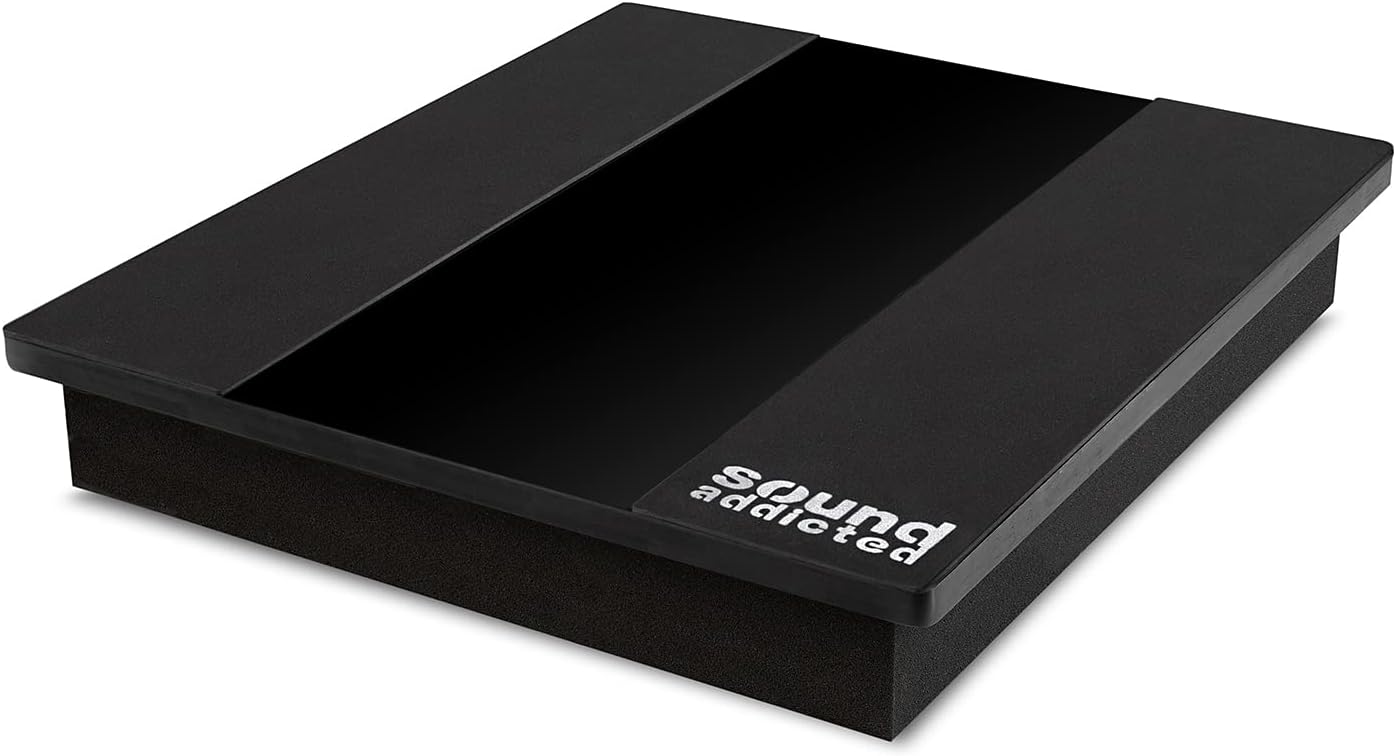
The quietest realistic setup is an electronic drum set with mesh heads, played through headphones, sitting on an anti-vibration mat. If a full electronic kit isn't in budget yet, a practice pad with mutes on an acoustic kit gets you most of the way there. Nothing on this list makes drumming silent — you're reducing noise and vibration, not erasing it.
Two Different Problems: Sound and Vibration
Airborne sound is what you hear directly — sticks hitting rims, cymbals, the crack of a snare. This travels through air and thin walls, and it's what headphones and quieter heads reduce.
Impact vibration is different. It's the low thump of a kick pedal hitting a drum, or a stand leg tapping the floor, transmitted through the structure of the building itself — floor, joists, walls — often reaching the unit below you more than the one beside you. This is why a neighbor downstairs can complain even when a room next door hears almost nothing. Vibration needs to be absorbed at the source, not just muffled in the air.
Good quiet gear addresses both.
Fixes Ranked by Impact
1. An electronic drum set
This is the single biggest change you can make. Mesh heads on an electronic kit are far quieter to hit than acoustic drumheads, and the sound only comes out through headphones, not a speaker aimed at the room. You still get some impact noise and pedal clatter, so it isn't silent, but it's the largest jump in quietness available.
2. An anti-vibration mat or riser
Placing the kit — electronic or acoustic — on a dedicated drum mat or riser helps absorb the impact vibration before it reaches the floor. This can matter most for downstairs neighbors, since that's where impact noise travels hardest.
3. A quiet practice pad
For hand technique — rudiments, stick control, warming up — a practice pad is close to silent and doesn't require setting up a kit at all. It's a normal part of daily practice for space or noise reasons, not just a beginner stopgap.
4. Mutes on an acoustic kit
Rubber or foam mute pads placed on drumheads and cymbals cut down a lot of the ring and volume on an acoustic kit. They change the feel and rebound somewhat, but they're a low-cost way to make an existing acoustic kit livable in an apartment.
5. Pedal choice and foot control
A smoother, well-adjusted bass drum pedal with a felt beater tends to produce less harsh impact than a hard plastic beater slammed at full force. Controlling how hard you drive the pedal — playing the kick, not stomping it — also reduces impact noise regardless of which pedal you own.
6. Ear plugs (for you, not your neighbors)
Ear plugs don't reduce the noise leaving the room — they protect your hearing when practicing on an acoustic kit or at higher headphone volumes. Worth having either way, but don't expect them to solve a noise complaint.
7. Sticks
Drum sticks themselves don't make you quiet, but lighter sticks or brushes on a pad or muted kit can take some edge off the attack compared to heavier sticks played hard.
8. A stable throne
A wobbly or creaky drum throne can add its own rattling noise as you move. It's a small factor compared to the kit itself, but a solid, adjustable throne removes one more source of unwanted sound.
What Won't Help Much
A thick carpet by itself. Carpet softens some airborne sound in the room, but it does very little against the low-frequency impact vibration traveling through the floor structure — that needs an actual mat or riser under the kit, not just flooring.
Foam panels on the walls. Acoustic foam is for room sound quality — reducing echo and reflections inside the room — not for stopping sound or vibration from reaching another apartment. It's a common mix-up.
Playing softer as your only strategy. It helps a little, but pedal and kick impact is mostly mechanical, not about how hard you hit — a felt beater and controlled foot technique will do more than trying to play everything quietly all the time.
Putting It Together
If you can only make one change, go electronic with headphones. If you already have an acoustic kit and can't switch yet, stack mutes plus a mat under the kit plus a practice pad for extra reps away from the kit entirely. None of this guarantees zero complaints, but each layer removes another source of noise or vibration, and together they often make the difference between "we can hear that" and "we don't notice."