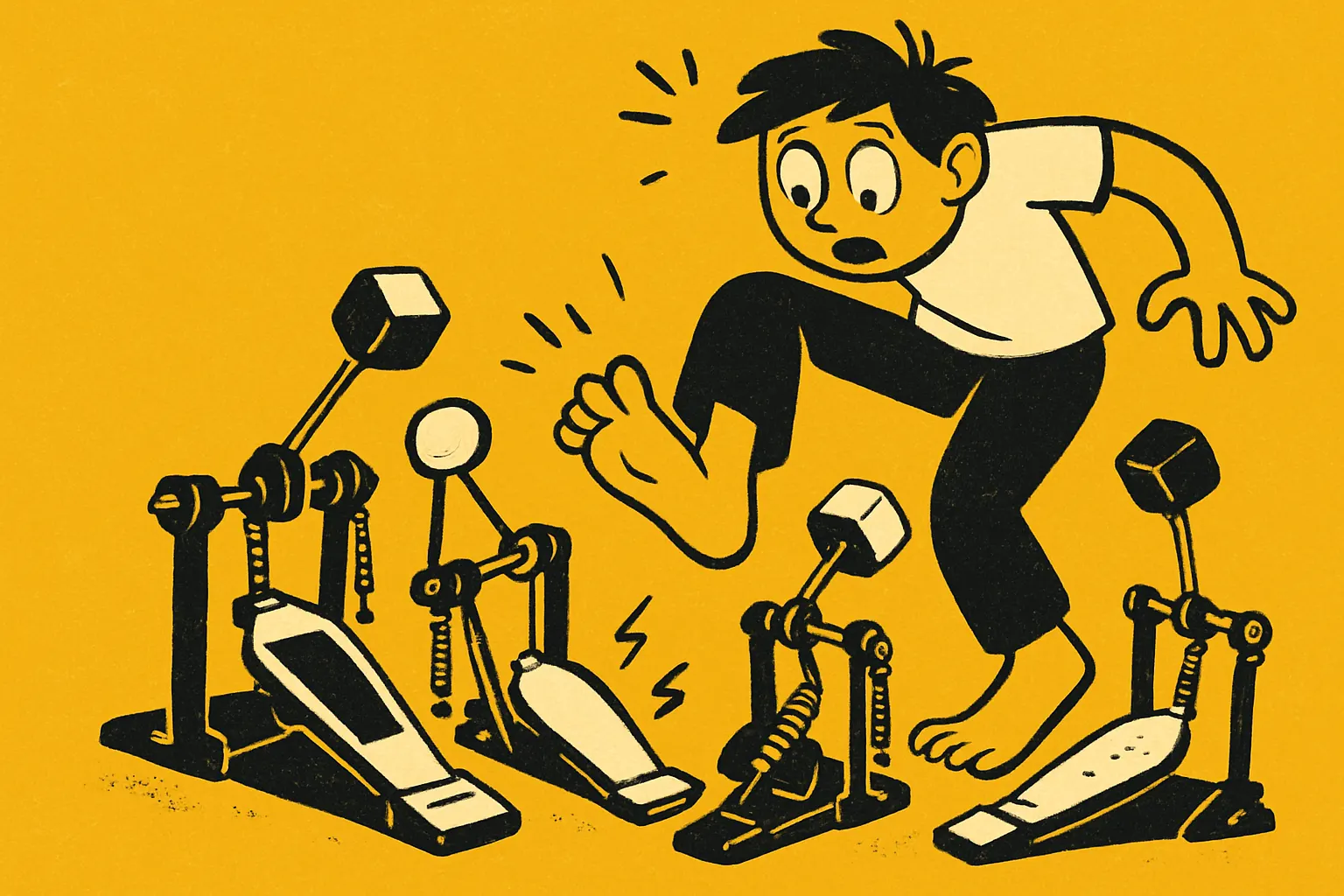
What a "Drum Pedal" Actually Means
The word "pedal" covers a few different foot-controlled parts of a kit:
- Bass drum pedal — strikes the kick drum. This is often what people mean when they say "drum pedal."
- Hi-hat pedal — opens and closes the hi-hat cymbals with your left foot. Many beginner kits, acoustic or electronic, already come with one.
- Timpani pedal — controls pitch on orchestral timpani. Not something a kit drummer needs to think about.
This guide is about the bass drum pedal, since that's the one people often have to buy separately or replace.
Who Actually Needs to Buy One
You'll likely need a pedal if:
- You bought a used acoustic kit and it didn't come with one.
- Your current pedal feels loose, squeaky, or unreliable.
- You're building a kit piece by piece and the pedal is next on the list.
If you're playing an electronic drum set, check what's included first — many beginner electronic kits ship with a basic bass pedal and hi-hat pedal built into the package, so you may not need to buy anything extra right away.
What Actually Matters for a Beginner Pedal
Drive mechanism. Chain-drive is a common type of bass drum pedal, and it's a safe default for a beginner. There are two versions — single chain and double chain. The core idea is the same either way: a chain connects the footboard to the beater. If you're just starting out, either type will let you learn proper technique; the differences are worth feeling out in person once you're upgrading later, not something to stress over on your first pedal.
Footboard. Look for a heavy-duty footboard — this is standard on beginner-friendly pedals and holds up better to daily practice than a flimsy one. Many pedals also use a split footboard with a hinged heel piece, which can be anchored down for more power and control once you're comfortable with your technique. As a beginner, you don't need to master this feature immediately — just know it's there when you're ready.
Base and stability. A slip-resistant base keeps the pedal from sliding around on hard floors while you play. This matters more than it sounds — a pedal that creeps forward mid-practice is a constant, annoying distraction.
Single vs. double pedal. You may see pedals sold as "single" or "double." A double pedal adds a second footboard (played with your left foot) that strikes the same bass drum, used for double-bass drumming. As a beginner, skip this. Learn solid single-pedal technique first — a double pedal solves a problem you don't have yet.
Recommendations
For a solid first pedal, see our picks in best bass drum pedals for beginners — all chain-drive, heavy-duty footboard, slip-resistant base, no unnecessary extras.
Pedal Technique Starts With Your Seat
A pedal only works as well as your setup lets it. If your drum throne is too low or too high, your foot angle changes and the pedal can feel awkward no matter how good it is. Get your seat height sorted before you blame the pedal.
What Won't Help — and Alternatives Worth Knowing
If you live in an apartment and the bass drum pedal's low-end thump is the real problem (not the pedal itself), a pedal upgrade won't fix noise or vibration. That's a floor and drum-head issue — an anti-vibration mat under the kit does more for that than any pedal will.
If you want to build foot coordination without a full kit — say, while traveling or practicing quietly — portable foot percussion devices exist as an alternative to a full bass drum pedal. They let you tap out a beat with your foot without needing an actual drum attached, though they're a supplement to practice, not a replacement for playing a real pedal once you're at your kit.
When to Skip Upgrading
If your current pedal is chain-drive, has a heavy-duty footboard, and sits still while you play, it's doing its job. Don't chase a fancier pedal because of gear envy — spend that time and money on sticks, a practice pad, or just more reps.

