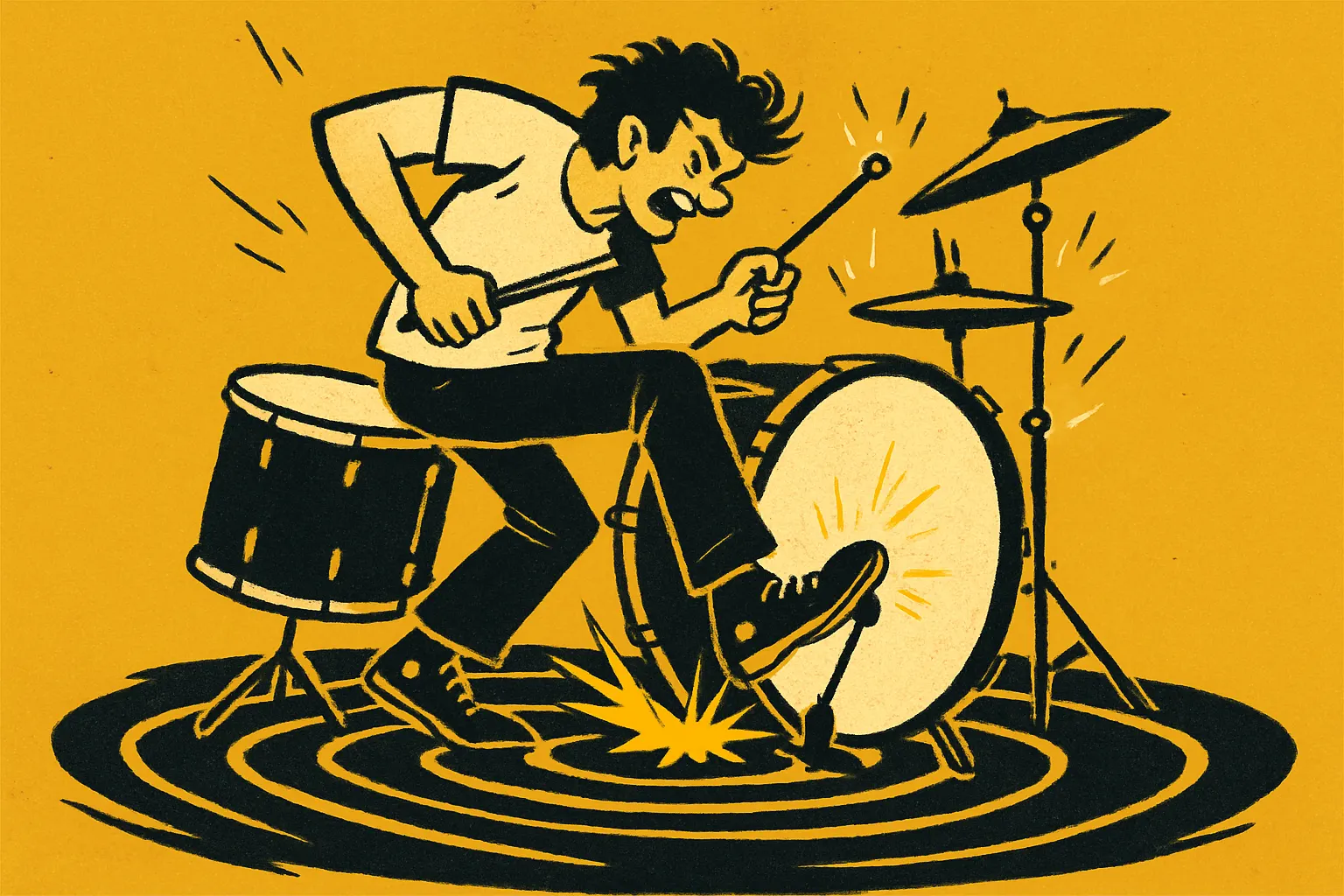
The part of drumming that often upsets neighbors most isn't the sound you hear — it's the vibration you don't. A kick pedal beater striking a bass drum (or an electronic kick pad) sends a low thump straight into the floor, and that thump travels through the building's structure far better than it travels through air. This is why an apartment below you can suffer even when the room next to you barely notices anything.
Electronic drums help a lot, but they don't erase this problem. The sound coming out of the module can be silenced with headphones, but your foot still hits a pedal, your sticks still hit rubber pads, and all of that physical impact still moves through the floor.
Two different noise problems, not one
Airborne sound is what travels through the air and gets absorbed or blocked by walls and doors — this is what an acoustic kit produces loudly and an electronic kit produces quietly (mostly the click of sticks on pads and the pedal mechanism).
Structure-borne vibration (also called impact noise) is what happens when something physically strikes the floor. It travels through the wood, concrete, or joists of the building itself, which carries low-frequency thumps much farther and with much less loss than air does. This is why a downstairs neighbor can hear your kick drum clearly while someone in the next room over hears almost nothing.
An electronic kit addresses much of the airborne problem. It does very little on its own for the vibration problem, because the physical impact of foot on pedal and stick on pad still happens.
Why the floor matters more than the walls
Sound and vibration follow the path of least resistance. Airborne sound loses energy quickly as it crosses air, walls, and gaps — a closed door and some distance already knock a lot of it down. Vibration through a shared floor or ceiling doesn't lose energy the same way; it rides along solid material that's directly connected to your neighbor's ceiling.
That's the practical reason the downstairs neighbor is often the one who complains, not the one across the hall. If you live on a ground floor with no unit below you, your biggest noise problem shrinks considerably — you're mostly dealing with airborne sound and shared walls instead.
Fixes, ranked by how much they actually help
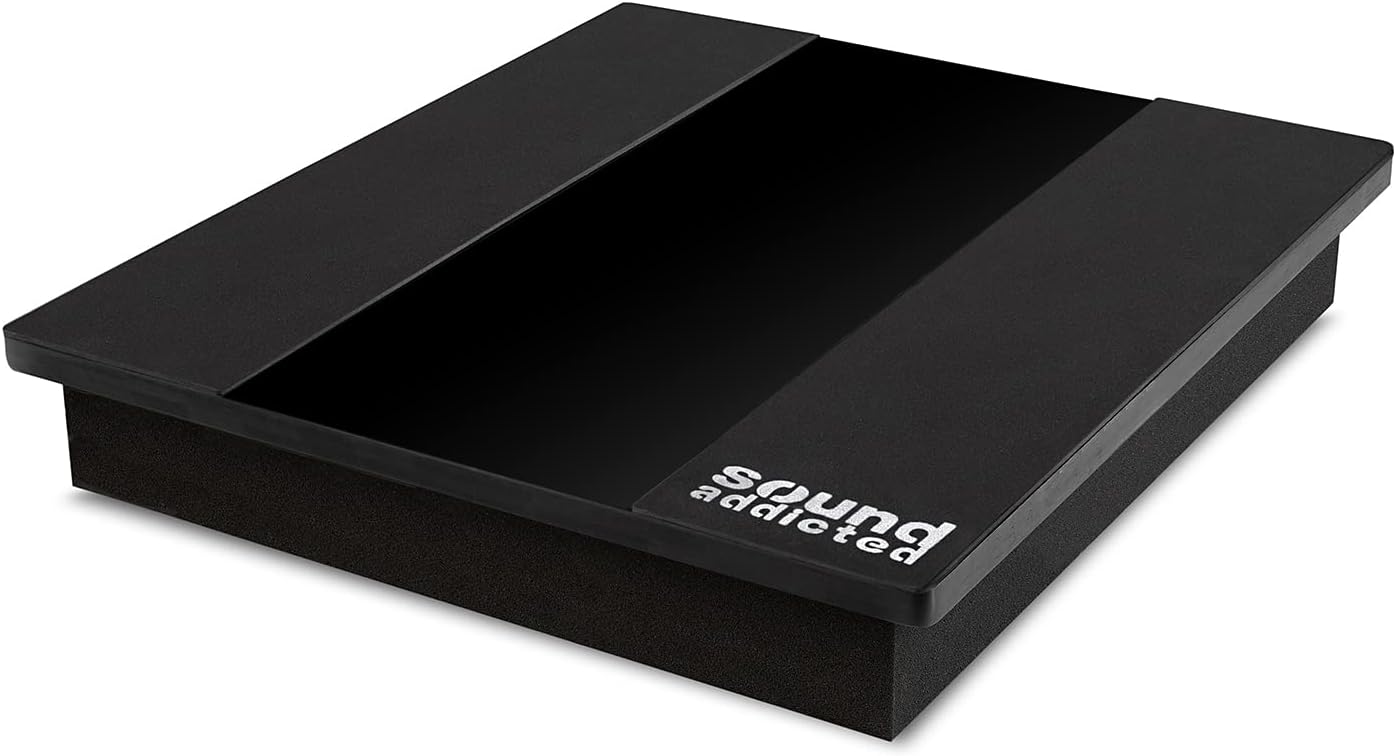
1. Put something between the kit and the floor. A dedicated isolation platform or a thick anti-vibration mat under the whole kit is the single highest-impact fix, because it addresses the vibration problem directly instead of trying to cover it up. A rug alone helps a little with scuffing and small impacts but isn't dense or decoupled enough to stop kick-pedal transmission on its own.
2. Play electronic, and take the volume problem seriously. An electronic drum set removes the loud acoustic shell sound and lets you practice through headphones, which addresses the airborne half of the equation almost completely. It does not solve the vibration half — you still need something under the kit.
3. Pay attention to your bass drum pedal and beater. Some bass drum pedals let you swap in a softer beater head, and a lighter, more controlled stroke produces less impact than really driving the beater into the pad. This won't eliminate the thump, but it can reduce it.
4. Mind the time of day. This is coaching, not a noise-physics fix: a thump that's ignorable at 3 p.m. can feel much more intrusive at 11 p.m., simply because the room and building are quieter overall and any remaining vibration stands out more.
5. Use headphones and quiet sticks/pads for the sound layer, not the vibration layer. Good headphones for electronic drums and a decent set of drum sticks matched to a practice pad reduce click and clack noise for quiet practice sessions, and they're worth having regardless — but they don't touch floor-borne bass drum thump.
What won't help much (common myths)
Foam panels or "egg carton" foam on the walls. These absorb high-frequency airborne sound reasonably well in a room, which can help with room echo, but they do almost nothing about low-frequency vibration traveling through a floor. People often buy this expecting it to fix a downstairs-neighbor complaint, and it doesn't touch that problem at all.
Moving the kit to a corner. This can slightly change how sound reflects around your own room, but the floor under the kit is still transmitting the same impact, so it doesn't meaningfully change what the neighbor hears.
Playing softer as your only strategy. Lighter playing does reduce both airborne volume and impact force somewhat, and it's a reasonable habit — but it's not a substitute for isolating the kit from the floor if the real issue is bass drum vibration through a shared structure.
A rug by itself. A rug can reduce sliding and small scuffing noises and make a room feel more comfortable, but it isn't thick or isolating enough by itself to stop a kick pedal's impact from reaching the floor joists.
A realistic setup for apartment drumming
If noise is a real concern where you live, a reliable combination is an electronic kit for the airborne sound, a proper isolation platform or thick mat under the whole kit for the vibration, and headphones so you can practice at any volume without needing the module's speaker on at all. None of these fixes needs to be perfect — even a partial setup meaningfully lowers what travels to your neighbors, and you can also ask directly what times work for them.