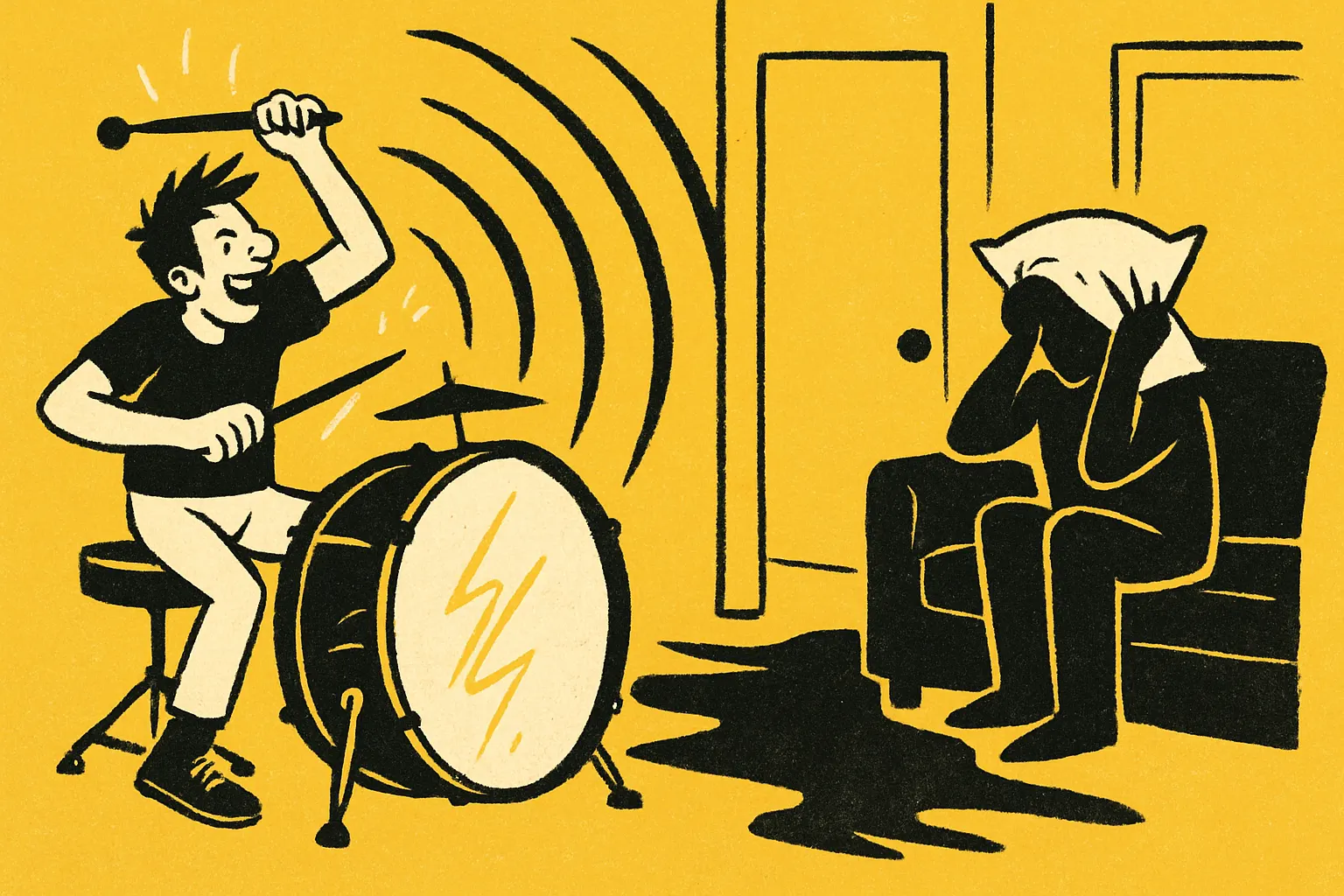
If you share a home with roommates, family, or a partner, the biggest source of tension often isn't the volume of your drumming — it's the low thump they feel through the floor or wall, and not knowing when it's going to happen. Fix the schedule and the low end first, and a lot of the friction tends to ease up.
The real problem isn't just "noise"
A snare hit or cymbal tap is loud, but it's short and easy to tune out. The kick drum and the vibration of the whole kit are the real irritants. That low-frequency thump travels through the floor, into the walls, and into the next room — even through headphones-friendly setups if the shell or pedal is still banging against a hard floor. People you live with don't just hear your drumming; they feel it in the couch, the wall behind their desk, or the ceiling below.
Unpredictability makes it worse. A five-minute warm-up at a random hour can feel more disruptive than a longer session at a time people expect.
Fixes ranked by impact
1. Talk about it before it's a problem.
Agree on a practice window that fits everyone's schedule — work calls, nap times, thin walls. This costs nothing and solves more conflict than any piece of gear. Fifteen minutes of "here's when I'll play and for how long" saves weeks of passive-aggressive notes.
2. Go electronic and use headphones.
An electronic drum set with a good pair of headphones for electronic drums removes most of the airborne sound and much of the impact noise, since you're not swinging full force into an acoustic shell. It's one of the biggest changes you can make if drumming with others in the house is a daily source of stress.
3. Cut vibration at the source.
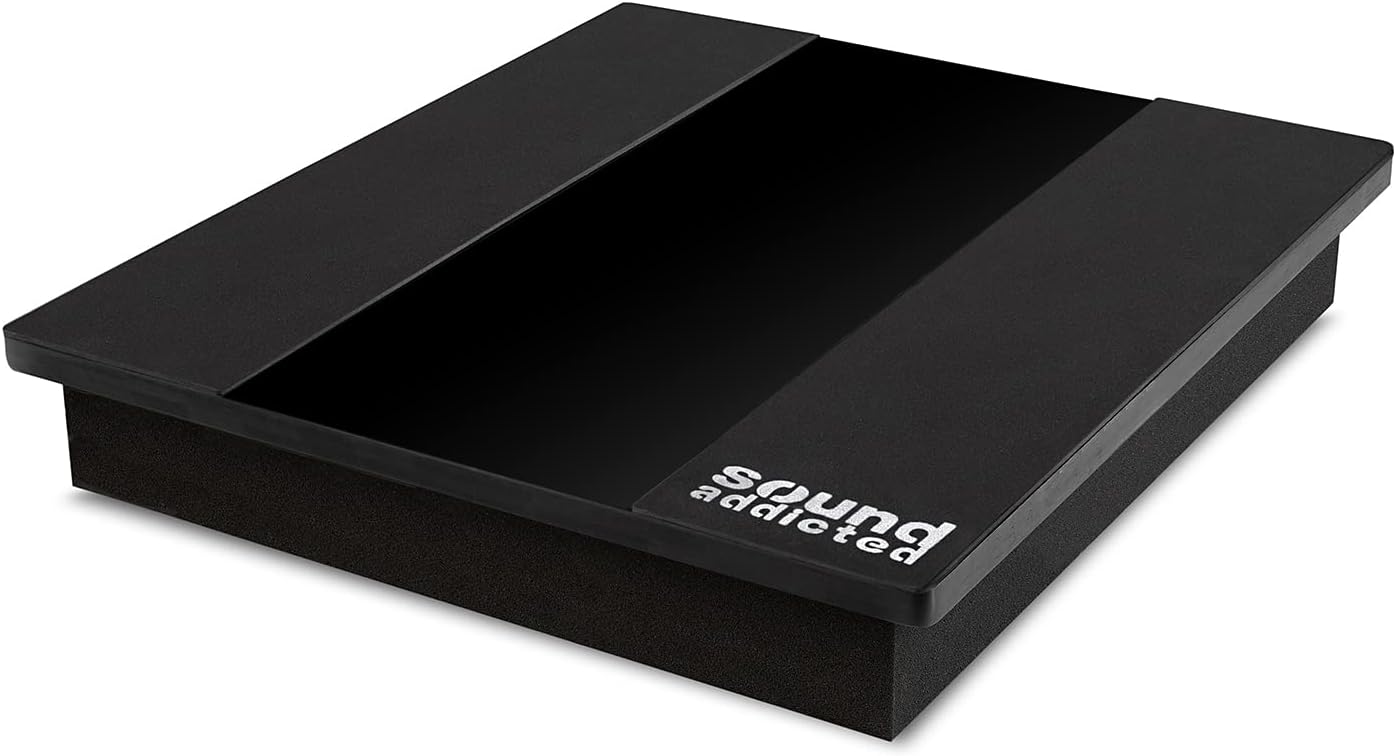
Even electronic kits and pedals transmit some thump through the floor. Placing the kit on an anti-vibration mat or riser helps absorb that impact before it reaches the floor joists — this matters more in apartments than houses, and more on upper floors than ground level.
4. Use a practice pad for silent reps.
A lot of what you're working on — stick control, rudiments, timing — doesn't need a full kit at all. A practice pad with a decent pair of beginner drum sticks lets you rep hand technique at almost any hour without anyone in the next room noticing.
5. Protect your own ears if you do play loud and acoustic.
If you get real kit time — a garage, a friend's space, a studio — a pair of ear plugs for drummers is worth having regardless of who else is around. It's a separate issue from cohabitant noise, but it's easy to forget once you're focused on not bothering anyone else.
6. A stable throne and pedal reduce accidental noise.
A wobbly drum throne or a cheap bass drum pedal that rattles or slides adds extra bangs and scrapes that have nothing to do with your playing. Tightening up your setup removes noise nobody was expecting, including you.
What won't help much
- Foam or egg-crate padding on walls. This reduces echo inside your room, not the sound leaving it — it does very little for people in other rooms.
- A thick rug by itself. It softens some impact but doesn't stop the low-frequency vibration that travels through the floor structure; pair it with a proper riser if you're on an acoustic kit.
- Just "playing quieter." Bass drum and floor tom vibration isn't mainly about how hard you hit — it's about contact with a hard surface transmitting energy through the building. Softer hands help a little; a riser and schedule help a lot more.
Living together, practically
Living with other people means your practice time is shared time, whether you like it or not. The drummers who cause the least friction aren't necessarily the quietest — they tend to be the more predictable ones. Set a window, stick to it, and use headphones or a pad outside of it. That one habit solves more than any single piece of gear.