What It Actually Is
The Moongel Workout Pad uses a gel/silicone playing surface instead of rubber. It comes in two sizes:
- 14-inch pad — often sold as a bundle that includes a pack of Moongel (the little gel dots drummers stick on cymbals and drumheads to cut overtones) and RTOM stickers.
- 7-inch pad — sold as a 2-pack, with an 8 mm stand adapter so you can mount it on a drum stand instead of using it flat on a table or your lap.
Bundles come in a couple of colors, including blue and clear, so the color you get is mostly cosmetic — it doesn't change how the pad plays.
What Makes It Feel Different From a Regular Pad
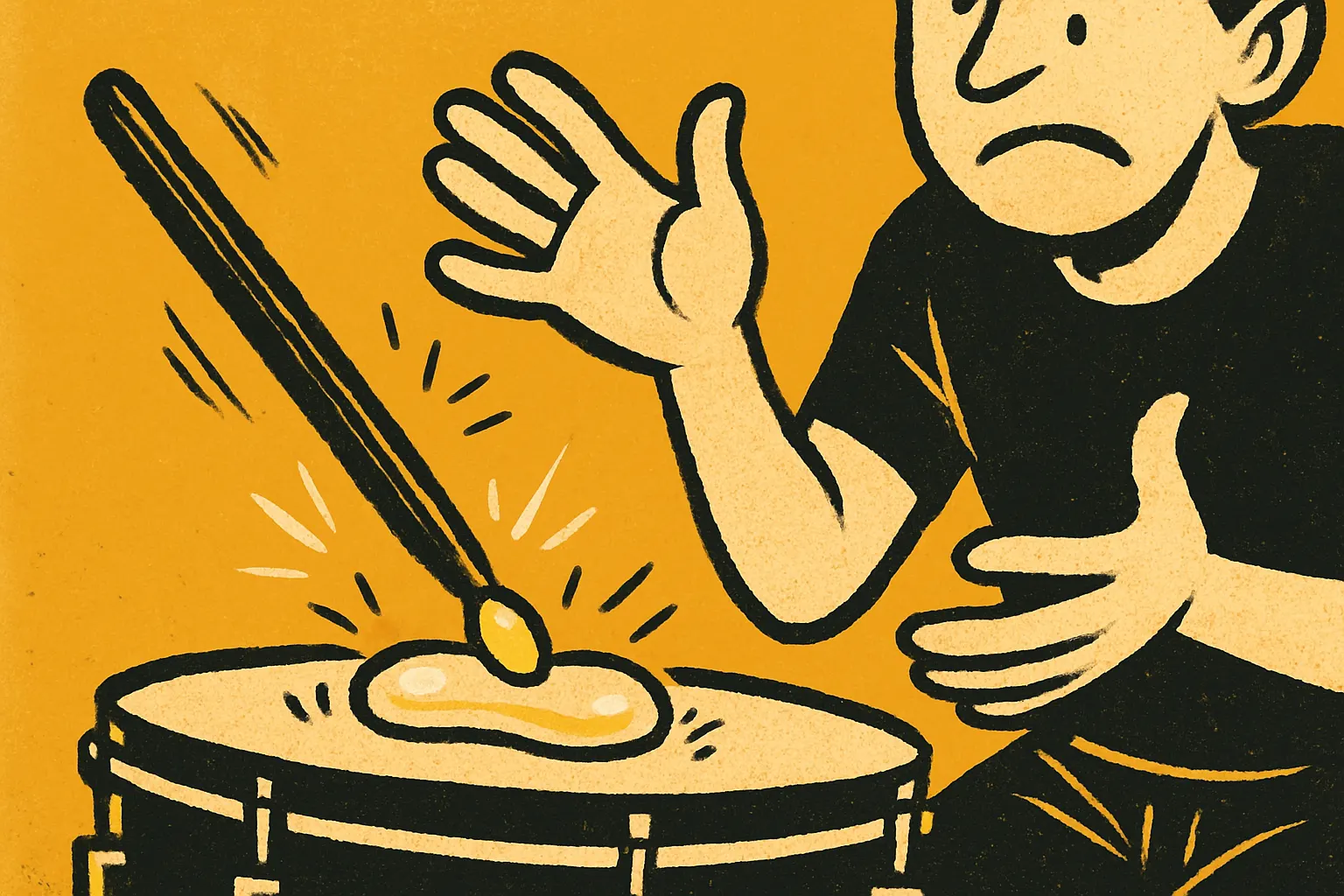
Many practice pads (rubber over foam, or a mesh-style pad) give you some rebound so a stick can bounce back toward your hand, similar to a drumhead. The Moongel pad has almost zero rebound. It's not mushy like hitting a pillow — there's still a defined surface — but the stick just doesn't come back up much on its own.
Compared to an Evans RealFeel pad, players who've used both describe the Moongel pad as noticeably less bouncy. That's the whole point of the design: with less help from rebound, your hand has to do more of the lifting work on every stroke.
Who This Pad Is Actually For
This pad can make sense if:
- You already know the basic idea of a stroke (down, let it rest or lift, back up) and want to build strength and control in your hands.
- You want to run rudiments or Stick Control-style exercises somewhere quiet, without worrying about a bouncy pad masking sloppy technique.
- You want something small enough to bring on trips.
It's a weaker fit if you're still learning what rebound feels like in the first place. Since the pad barely bounces back, you won't get much feedback on using the stick's natural rebound — a skill you'll eventually need on an actual drum sticks + drumhead setup or a standard rubber pad. Think of it as a strength and control tool that works alongside a normal pad, not a full replacement for one.
Setup and Sizing
The 7-inch size is the more practical option if you want to mount it on a stand at drum height — the 8 mm adapter is built for that. The 14-inch pad is bigger and gives you more room to move around the pad, which some players prefer for rudiments that travel across a surface, but it's generally sold to sit flat rather than mount on a stand.
If you're not sure which pad style fits your setup at all, our best practice pads for beginners guide compares this style against standard rubber and mesh pads.
What to Expect From Practicing on It
Because there's so little rebound, every stroke takes more effort from your hand and forearm than the same stroke on a bouncier pad. One player reported their forearms burning after about 20 minutes of Stick Control practice on the 14-inch pad — which lines up with what you'd expect from a low-rebound surface: it turns into more of a strength workout than a bounce-and-relax session. That's not automatically a bad thing if you're deliberately trying to build endurance, but it's worth knowing going in so you don't push through pain or bad form just to

