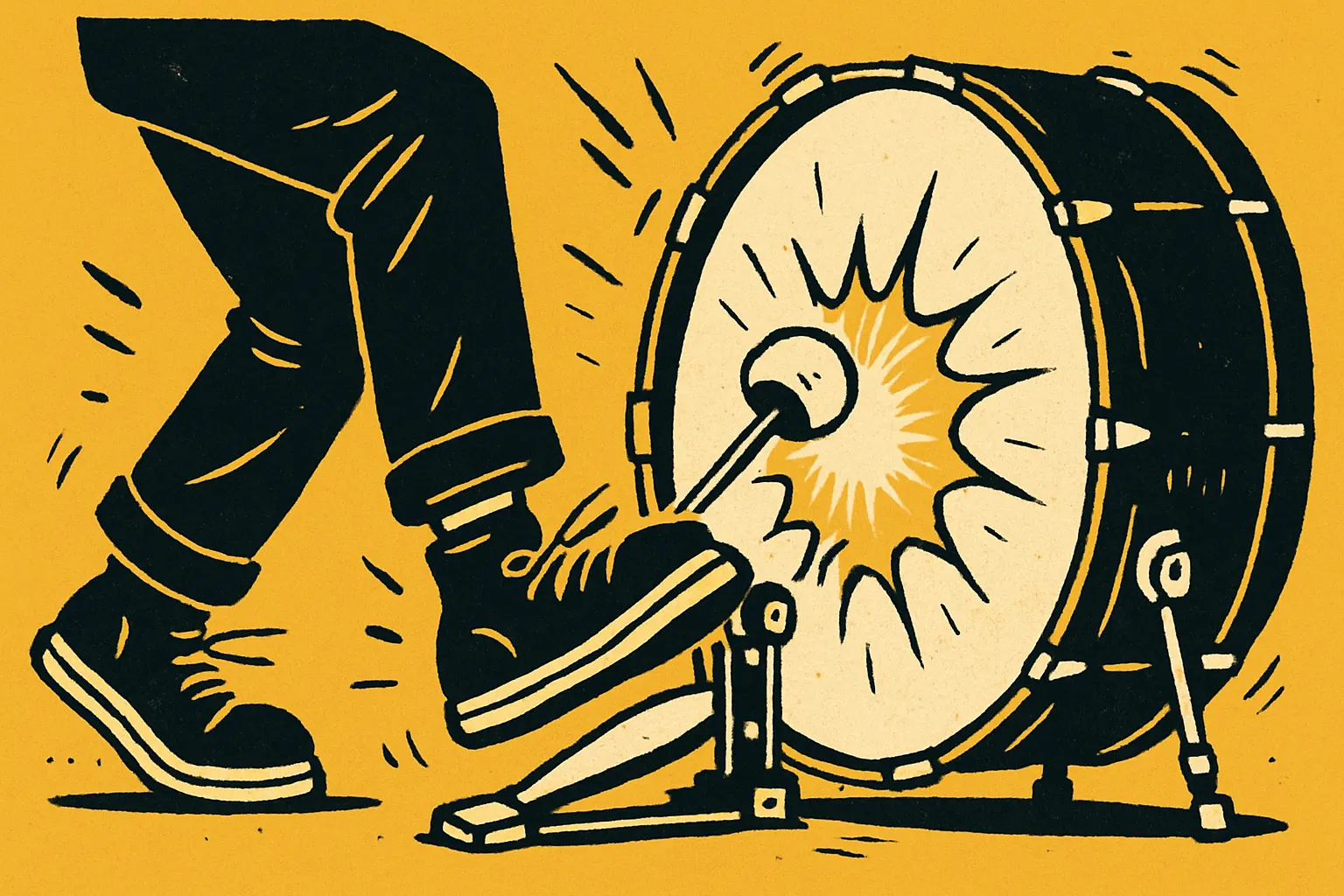
The kick drum is the big drum at the bottom of the kit that you play with your foot, not a stick. It's also called the "bass drum" — same instrument, two names drummers use interchangeably. It sits low in pitch and low in the mix, and it's usually the drum that lines up with the pulse of the song, which is why almost every beat starts by figuring out where the kick goes.
Kick Drum vs Bass Drum: Same Thing, Different Room
If you've heard both terms and wondered if they're different instruments, they're not. "Kick drum" and "bass drum" refer to the same drum on a standard kit — some drummers say one, some say the other, and the drumming community genuinely argues about which is more correct. Nobody is wrong here. Use whichever word feels natural; people will know what you mean.
Where it gets confusing is the other bass drum — the huge one you see in marching bands or orchestras. That's a much bigger, deeper drum played with a handheld mallet. The kick drum on your kit is a smaller, kit-sized version played with a foot pedal.
| Kick drum (drum kit) | Marching/concert bass drum | |
|---|---|---|
| Size | Smaller | Much larger |
| Played with | Foot pedal + beater | Handheld mallet |
| Role | Anchors the groove with kit + hi-hat + snare | Carries low-end pulse in a larger ensemble |
Why It's Played With Your Foot
A pedal holds a beater — a small hammer-like striker — that swings forward and hits the drumhead when you press the pedal with your foot. That frees up both your hands for the snare, hi-hat, and cymbals at the same time. This is the part that trips up most beginners: your foot is now doing rhythm work independently of your hands, and that coordination takes deliberate practice, not just time.
If your current pedal feels sticky, slow, or hard to control, it's worth checking whether the pedal itself is the problem before you blame your foot — see our bass drum pedals for beginners guide for options that are easier to control at low volumes and slow tempos.
Common mistake: mashing the pedal flat-footed and hoping for the best. Try resting your heel down for control at first, and only lift it for power once the basic motion feels steady.
Why the Kick Sounds the Way It Does
The kick's low, thumpy tone comes largely from its shell being bigger than the other drums on the kit — more shell volume means lower pitch. Underneath that, a kick sound is really three parts stacked together: the attack (the click of the beater hitting the head), the body (the low tone that follows), and the tail (how long it rings before it dies out). You don't need to tune or mic any of this as a beginner, but it helps to know why a kick can sound completely different from one kit — or one recording — to the next. That's also why the kick can act almost like a genre fingerprint: a tight, short kick reads differently than a deep, boomy one, even before anything else in the song plays.
Because the kick is the lowest-pitched drum on the kit, it's usually the anchor other instruments build around — it can shape the whole feel and tempo of a song, not just fill in the bottom end.
How a Basic Drum Beat Actually Works
A "beat" is just kick, snare, and hi-hat playing together in a repeating pattern. The hi-hat keeps steady time, the snare marks the backbeat (beats 2 and 4), and the kick fills in the rest of the pulse. Here's the most common starting pattern:
Read it left to right: hi-hat plays every eighth note, snare lands on beats 2 and 4, kick lands on beats 1 and 3. That's it — that's the beat under a huge number of songs. Once your foot can hit those two kick notes cleanly while your hands keep going, you already have a real, usable groove.
Takeaway: you don't need a fast or fancy kick pattern to play a real song. Two solid kick hits per bar, locked in with the snare and hi-hat, is a complete beat.
A Small Exercise to Feel It
Start without sticks. Sit at your kit (or a practice pad setup if you're keeping things quiet) and just play the kick pattern above on its own — kick on beat 1 and beat 3 — at a slow, comfortable tempo. Once that feels steady, add the hi-hat with your hand. Only bring in the snare last. Layering it this way, one limb at a time, is how the four-limb coordination actually gets built instead of guessed at.
Make sure you're sitting at a height where your foot can move freely over the pedal — a drum throne that's too low or too high will fight your kick technique before you've even started.
Common Mistakes
- Playing the kick too hard, too soon. Foot control matters more than foot power this early on.
- Ignoring the pedal's beater angle and spring tension. A pedal set up awkwardly for your foot size makes even simple patterns feel harder than they are.
- Trying to add kick variations before the basic pattern is automatic. Get beats 1 and 3 rock-solid before experimenting with extra kick hits.