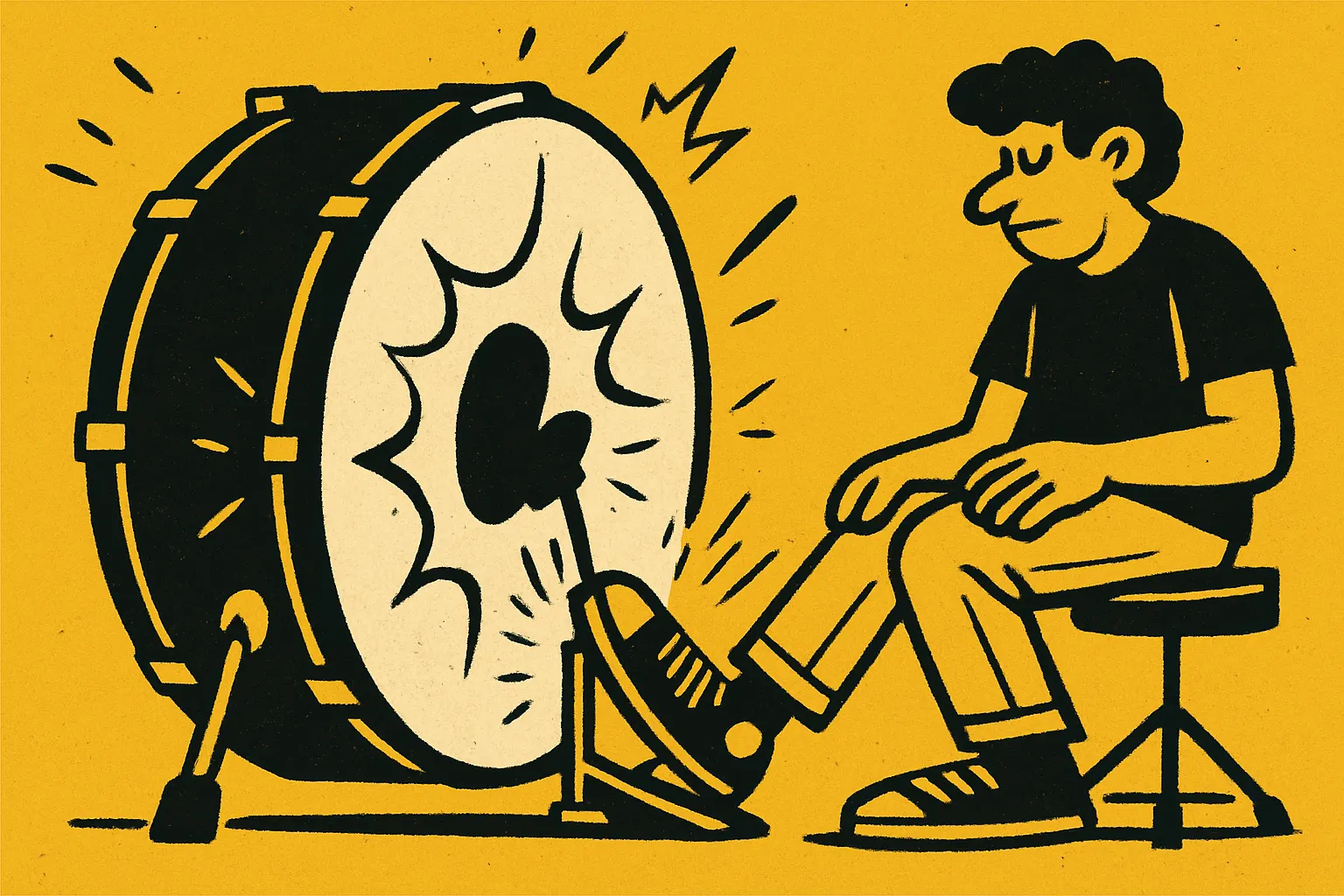
Bass Drum or Kick Drum? Both Are Right
On a drum set, "bass drum" and "kick drum" mean the exact same piece of gear. Some drummers say "bass drum" because that's the traditional name carried over from orchestras and marching bands. Others say "kick" because that's literally what you do to it — kick the pedal with your foot. Drummers argue about which term is more "correct," but neither is wrong. Use whichever one your teacher, bandmates, or favorite drummer uses, and don't worry about it beyond that.
Where It Sits and How You Play It
Unlike the snare or toms, you don't hit the bass drum with a stick. It sits horizontally on the floor, and you play it by pressing a foot pedal that swings a beater into the drumhead. That's why it's the one drum on the kit tied to your foot instead of your hands — which is also why it feels so strange at first. Your hands are used to holding drum sticks and doing the coordinating; asking your foot to keep independent time takes getting used to.
A solid, comfortable seat matters here too. If you're perched too high or too low, your leg angle changes and the pedal feels awkward before you've even started. A properly adjusted drum throne makes the bass drum easier to control from day one.
Why It Matters in a Beat
The bass drum doesn't play a clear, singable pitch the way a piano note does — it produces a low thump with either a defined or a loose, thuddy tone depending on how it's tuned and muffled. What it does instead is give the music its foundation. Think of it as the heartbeat under everything else: the snare, hi-hat, and fills all sit on top of the pulse the bass drum lays down. When a beat feels solid, a lot of that feeling comes from the bass drum holding steady underneath.
Sizes: From Tight to Thunderous
Bass drums for a standard drum kit commonly range from about 18 inches across on the small end to 26 inches on the large end. A smaller bass drum tends to feel tighter and more focused; a larger one has more low-end boom. There's no single "correct" size — the right size depends on the style of music you're playing and the sound you're going for, so different genres and setups favor different sizes. Well-known drum brands like DW are common choices when shopping for a bass drum, though as a beginner you'll typically be buying a whole kit rather than a bass drum on its own.
Bass Drum vs. Marching Bass Drum
If you've seen a marching band, you've seen a completely different kind of bass drum. Marching bass drums are a separate category built for being carried and played standing up, made in sizes from 16 to 32 inches, often with fiberglass or wood shells. They're played with mallets, not a foot pedal, and they work in sets of multiple drums tuned to different pitches. It's a different instrument built for a different job — don't confuse the two when you're researching gear for a drum kit.
| Type | Played With | Size Range | Shell Material |
|---|---|---|---|
| Kit Bass Drum | Foot pedal | 18–26 inches | — |
| Marching Bass Drum | Mallets | 16–32 inches | Often fiberglass or wood |
Portable Bass Drum Options
If you play somewhere without room for a full kit — busking, a small stage, a practice space — compact foot-operated bass drums exist that give you that low-end thump without hauling a full-size shell. These standalone units are aimed at musicians who want the sound and feel of a kick drum without the rest of the kit around it.
If your main issue is apartment noise rather than portability, look at an electronic drum set instead — the kick pad is much quieter than an acoustic shell, especially paired with a good pair of headphones for electronic drums. An anti-vibration mat also helps if the thump is traveling through the floor to a neighbor below you, and a decent pair of ear plugs protects your hearing either way.
Try This: Feel the Bass Drum Foundation
You don't need a whole kit to get a feel for what the bass drum does. Try this:
- Put on a song with a clear, steady beat.
- Tap your foot on the floor along with the kick drum sound only — ignore everything else in the mix.
- Once that feels steady, try tapping quietly on a practice pad with one hand at the same time, just quarter notes, four evenly spaced hits per bar.
Go as slow as you need to. The goal isn't speed — it's noticing how the bass drum sits underneath everything else and holds the pulse steady even while other sounds move around it.
Common Mistakes Beginners Make
- Ignoring the foot until later. It's tempting to focus all your practice on hands and treat the foot as an afterthought. The bass drum is one of four limbs doing independent work, so it can use its own attention early on.
- Assuming bigger means better. A bigger bass drum isn't automatically a better one — it depends on the music you're playing and the tone you want.
- Mixing up bass drum and marching bass drum research. If you're shopping for a drum kit, marching bass drum pages and pricing won't apply to you — they're a different instrument entirely.
- Not checking your pedal. A mismatched or poor-quality bass drum pedal can make an already tricky new skill feel harder than it needs to be.