The Short Version
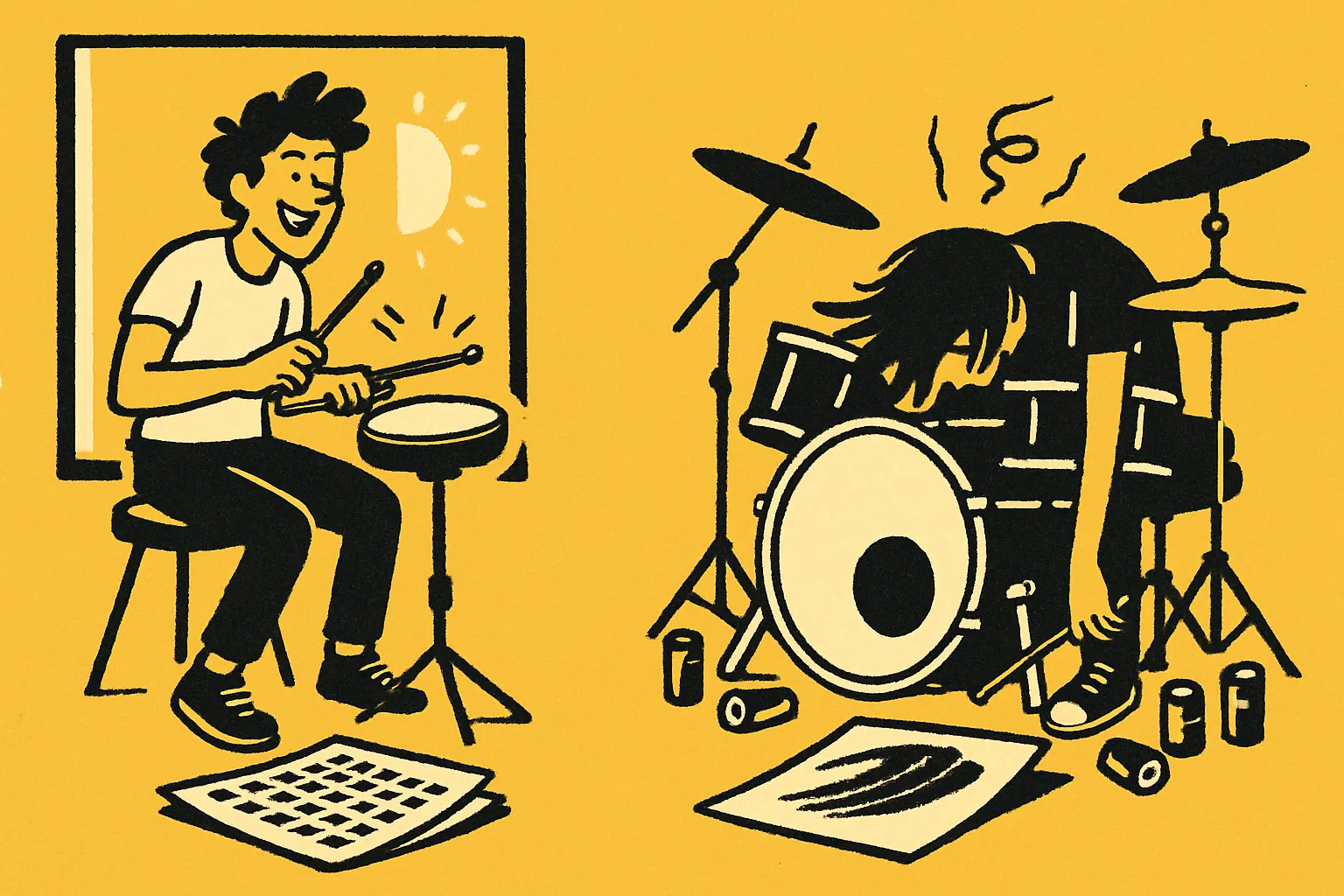
Aim for at least 15–30 minutes of practice every day or every other day when you're starting out. If you can commit more time, practicing around 45 minutes a day, five days a week, is a solid target once daily practice feels normal. Some drummers eventually stretch sessions to 90 minutes for deeper, more focused work — but that's not where you start.
There's no single "correct" number here. What matters more than the exact minutes is that you show up regularly.
Why Short and Frequent Beats Long and Rare
Consistent short sessions help you build muscle memory — the point where your hands and feet start doing a pattern without you consciously thinking through every hit. That kind of automatic movement comes from repetition spread across many days, not from cramming it into one long sitting.
If you only practice once a week for two hours, you spend a chunk of that session just re-finding what you already knew last week. Practicing a little most days keeps that knowledge closer to the surface.
How Long Should Each Session Be?
Keep individual sessions short enough that you can actually stay focused — for some players that's as little as 10 to 20 minutes, especially early on or if you're younger. Once you're locked in, that's a good practice session, not a lesser one. A focused 15 minutes beats a distracted hour.
As your attention span and stamina build, you can stretch toward 45 minutes, and eventually up to 90 minutes when you want to go deep on something specific, like learning a full song or working through a tricky fill. Longer sessions aren't required to make progress — they're an option once shorter ones feel easy.
If you're practicing quietly on a practice pad rather than a full kit, you can often sneak in short sessions almost anywhere — at a desk, in front of the TV, while on a call. That flexibility makes it easier to hit "most days" even on busy weeks.
Building the Habit in the First Month
In the first 30 days, practicing every single day — even briefly — helps the habit stick. Skipping days early on can make it easier to talk yourself out of the next session too. Building a daily habit can take a few weeks of repetition before it starts to feel more automatic than something you have to remember to do.
A simple way to protect this: pick a fixed time of day, even just 15 minutes, and treat it as non-negotiable for the first month. After that, you can flex the schedule around what actually keeps you consistent.
What Changes as You Improve
Once daily short sessions feel easy, you can start using some of that time for deeper, slower work — things like isolating one tricky transition, working with a metronome at a lower tempo, or running through a full song a few times in a row. That's when longer sessions (up to around 90 minutes) start to pay off, because you have the focus to sustain them without just going through the motions.
If you're practicing on an electronic drum set, longer sessions are easier to fit into an apartment or shared house, especially with a good pair of headphones — you can practice later in the evening without disturbing anyone. On an acoustic kit, check in on your neighbors' schedule and consider ear plugs for your own hearing during longer sessions.
Common Mistakes
- Skipping days because "I don't have an hour." Fifteen focused minutes most days beats waiting for a free hour that may not come.
- Practicing past the point of focus. If you're just going through the motions, you're not reinforcing much — a shorter, sharper session is more useful.
- Treating week one and month three the same. Early on, the habit itself is the goal. Later, session length and depth can grow.
- Ignoring comfort. A wobbly throne or a pedal that fights your foot makes even a short session feel longer than it is — a stable seat and a responsive bass drum pedal make it easier to actually want to sit down and play.
Where to Start
If you're not sure what "enough" looks like yet, start here: 15–30 minutes, most days, for the first month. Don't worry about hitting 45 or 90 minutes until daily practice already feels like part of your routine. Consistency first, duration second.