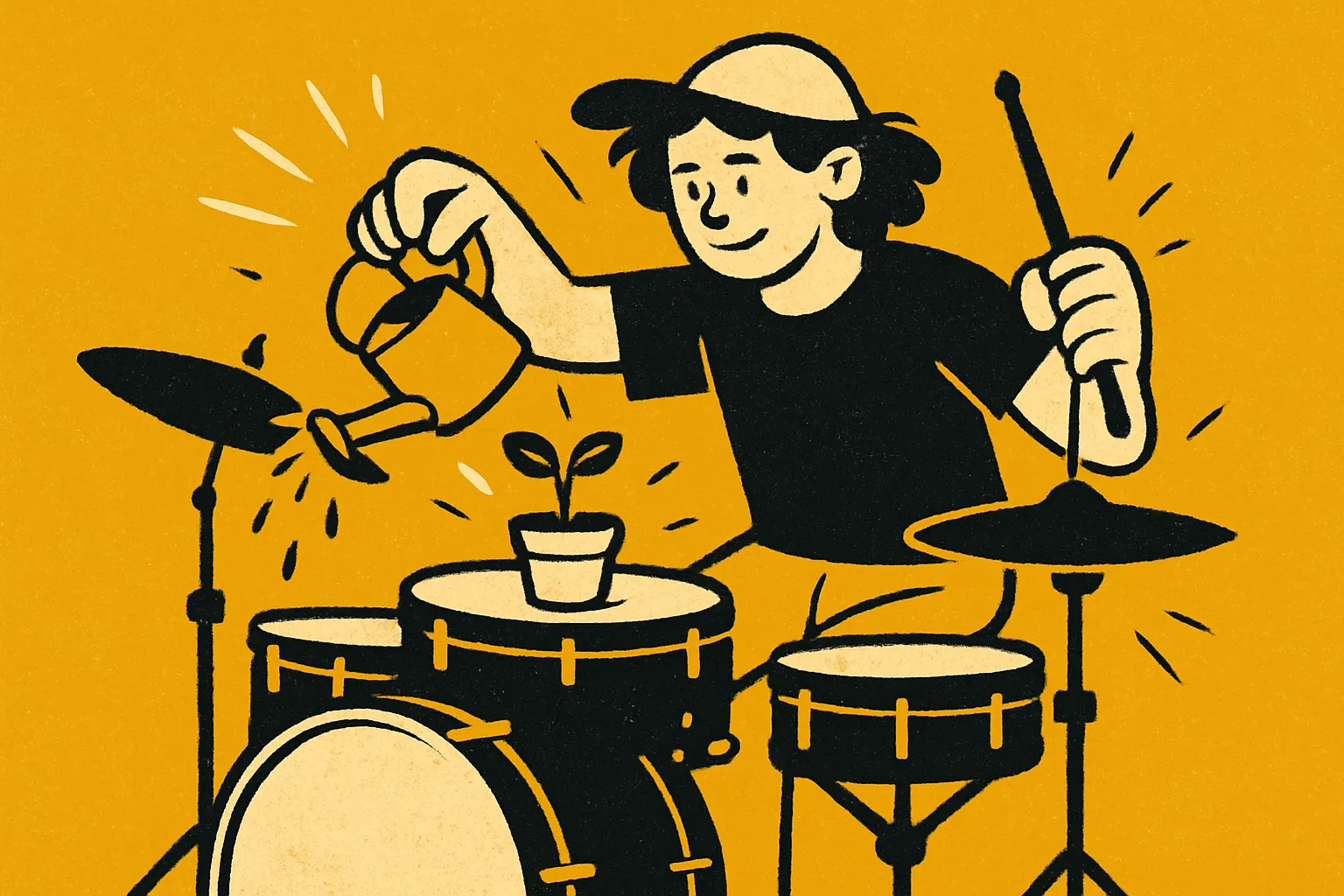
Your First Week: Get Comfortable, Not Good
Spend this week learning your setup, not chasing a sound. If you're on an acoustic kit, sit down and learn what each piece is called and does — snare, kick, hi-hat, toms, cymbals. If you're starting on an electronic drum set, same idea: learn where each pad and trigger lives before you worry about playing anything impressive.
A few things that make the first week smoother:
- Get your seat height right. A wobbly stool or a chair that's too low will wreck your first sessions before you even start playing. A proper drum throne is worth setting up correctly from day one.
- Hold sticks that fit your hands. Grab a beginner-friendly pair of drum sticks rather than whatever was lying around — grip comfort matters more than you'd think when you're new.
- Keep sessions short. Ten to twenty minutes of focused practice beats an hour of frustrated flailing. You're building comfort, not stamina.
- Don't skip the kick pedal. If you have a kit, spend a few minutes just working your bass drum pedal with your foot alone, no hands involved. Getting used to that motion early saves confusion later.
If you don't have a full kit yet, a practice pad is enough for week one. You're building hand comfort and basic timing, not playing songs.
Your First Month: Treat It Like a Trial Period
Once the first week is behind you, shift into a slightly different mode. Instead of just getting comfortable, start figuring out what actually works for you — your schedule, your space, your ears, and your neighbors.
Do a listening tour of your own playing. Just like asking around when you're new somewhere, spend some of this month listening — to recordings of yourself, to drummers on songs you like, and to any beginner community you're part of. You'll start noticing what questions you actually have instead of guessing.
Set boundaries early. If you live with other people or near neighbors, figure out your practice volume and hours now rather than after a complaint. This is also the month to sort out your noise setup: ear plugs for your own hearing, headphones for electronic drums if you're on an e-kit, and an anti-vibration mat if you're in an apartment and the low end is the real problem, not the volume.
Define a small win, not a big goal. Instead of "get good at drums," pick something specific and small — play a basic beat cleanly for one minute, or get through the verse of one simple song without stopping. A defined early win keeps the month from feeling shapeless.
Start on a real song, even a rough one. By the end of the first month, aim to be working on an actual piece of music, not just isolated exercises. It doesn't need to sound good yet — it needs to exist. This is the point where drumming stops being drills and starts being the thing you actually wanted to do.
Build a regular rhythm of sessions, not one long one. Consistent short practices spread through the month teach your hands and feet more than one marathon session does.
Expect a Slow Start Before Progress Shows
Here's the part that trips people up: your effort and your results won't line up right away. It's a bit like starting a job where your first paycheck lands later than you expected because the pay period started after you did — you put in the work, but the payoff shows up on its own schedule. Don't measure your first month by how good you sound. Measure it by whether you showed up and practiced.
Common First-Month Mistakes
- Judging yourself against week-one recordings of pros. You're comparing a first month to years of practice — of course it looks bad.
- Skipping the boring setup stuff. Throne height, stick grip, and practice space all quietly affect how much you enjoy sessions. Ignoring them makes everything feel harder than it is.
- Not setting volume boundaries until there's a problem. Sort out your noise plan before it becomes a conflict with neighbors or housemates.
- Practicing without any specific goal. "Practice drums" is vague. "Play this one beat cleanly" is not.
What "Done" Looks Like After Month One
By the end of your first month, you don't need to be impressive. A reasonable target: you know your kit's parts, you can hold a basic beat at a slow, steady tempo, you've started working on one real song, and you've figured out a practice time and volume setup that actually fits your life. That's a solid foundation — everything after this is refinement, not starting over.