Which of these sounds like you?
Counting breaks down in different ways, and more than one can be happening at once. Find the version that matches what you hear.
The count stops the moment your hands start moving. You can say "1, 2, 3, 4" fine on its own, and you can play the groove fine on its own — put them together and one of them dies. This suggests starting with the simplest possible groove at a very slow tempo, so the count has room to survive. The drill below is built for this branch.
You're fine until the fill. The numbers hold through the groove and vanish for two bars while you flail around the toms. Fills and transitions are a common trip-up, and counting the fill out loud can help you land back on beat 1 cleanly. Expect it to feel clumsy at first. See freezing during fills if that's where it comes apart.
The words come out but they don't line up with the click. You're counting beside the metronome instead of with it — the numbers drift a little early or a little late. Try counting along with the click, aiming to land your voice on top of it, which helps set your internal clock against something outside your head.
It works slowly, then falls apart above a certain tempo. If the tempo is too fast to think and react, the count can be the thing that gets dropped. Take it back to 50–60 bpm, where you have time to speak and play, and only move up when the count holds.
You can count quarter notes but not the faster stuff. The moment you try "1 e + a" it turns to mush. Get eighth notes solid first — "1 and 2 and 3 and 4 and," where the "and" is the offbeat that sits between the numbers — before you go near sixteenths.
You lose your place in the song, not the bar. You know where beat 3 is, but not whether you're in bar 2 or bar 6, so the change catches you out. That suggests working on counting bars as well as beats: "1-2-3-4, 2-2-3-4, 3-2-3-4…" so you can track eight bars of the same groove before the fill without guessing.
It only happens in odd time. In something like 5/8 or 7/8, counting can keep you from slipping back into a familiar 4/4 feel. Slow it right down and count every beat of the bar out loud.
Targeted fixes
Anchor on the numbers. The four beats of a 4/4 bar are your heartbeat — the thing you'd tap your toe to. Everything faster is a subdivision layered on top. If you lose the plot mid-bar, get back to the next number rather than trying to rescue the subdivision.
Cut the music into small pieces. Instead of counting your way through a whole song and guessing at the parts you don't know, take one groove, or one two-bar transition, and count that until it's accurate. Then join pieces together.
Say it out loud, not in your head. Out loud is harder, and it's also the version that tells you the truth — if the words stumble, something isn't secure yet.
Count the fill, not just the groove. Keep saying the numbers straight through the fill so beat 1 arrives where you expect it.
The drill: count survives a groove
This one is for the branch where counting stops as soon as your hands start moving. Other branches — bar counting, fills, faster subdivisions — have their own fixes above.
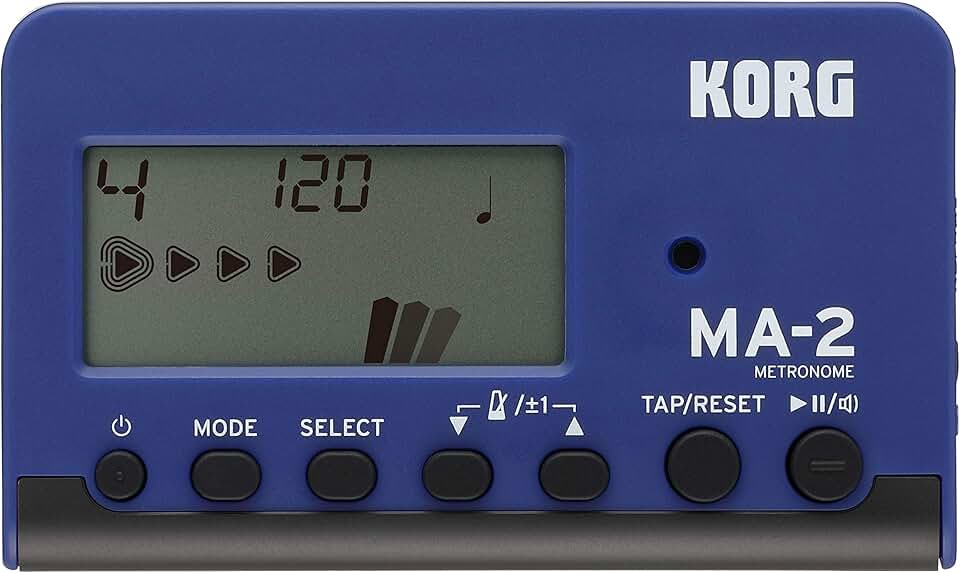
- Set a metronome to 60 bpm. If that feels messy, drop it to 50. There's no speed you have to prove here.
- Play quarter notes on the hi-hat: one hit per click, four per bar.
- Count "1, 2, 3, 4" out loud with the click — voice on top of it, not around it.
- Add bass drum on 1 and snare on 3. That's the classic backbeat shape, stripped down.
- Keep the count going, unchanged, for eight bars in a row. If it dies, stop, restart, and slow the tempo instead of pushing through.
When that's steady, count bars on top of it: "1-2-3-4, 2-2-3-4," up to eight, then start again. Only then start adding "ands" between the numbers.
Common mistakes
- Starting too fast. If you can't say the count comfortably at that tempo, the tempo is doing the deciding, not you.
- Jumping to sixteenths. "1 e + a" before eighth notes are secure gives you two problems instead of one.
- Counting silently to save face. In the practice room there's nobody to impress, and out loud is where the count gets tested.
- Trying to count a whole song at once. Break it into countable chunks.
- Assuming counting will flatten your groove. A steady internal sense of time can free you up — when you're not hunting for the beat, you have attention left for dynamics and feel.
- Counting out loud on stage. Live, counting tends to stay quiet — the count-in, silent counting through tricky passages, and abrupt time changes. Loud counting is a practice tool.
Related
- Timing and rhythm basics — what the numbers, "ands" and subdivisions actually mean
- Why do I speed up? — if the count holds but the tempo creeps
- Freezing during fills — for the branch where the fill is the problem
- Building a practice routine — how to make counting a habit rather than a one-off