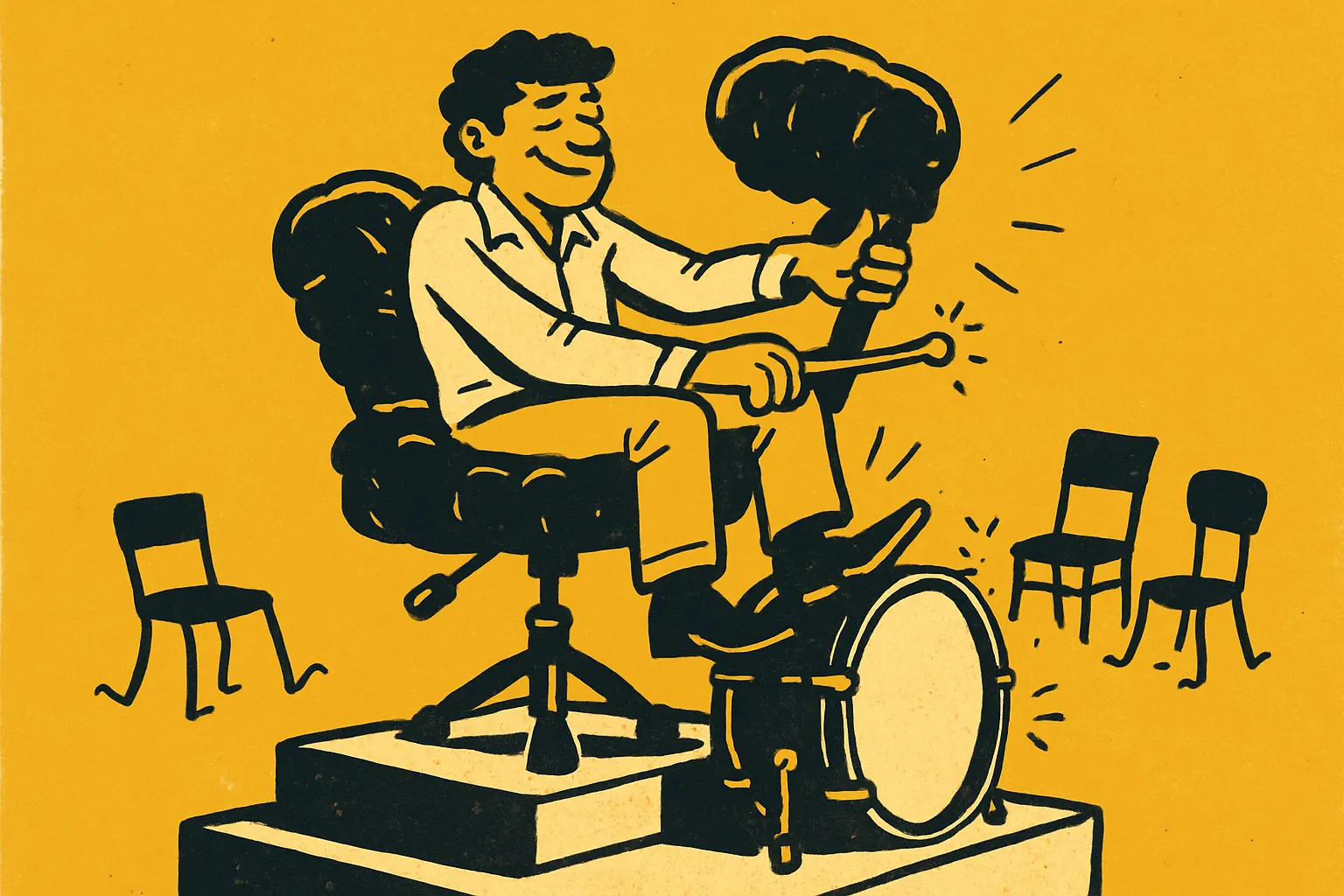
A drum stool — drummers call it a "throne" — is the seat you sit on behind the kit. Many are armless, foldable, and height-adjustable, with three to five legs and a seat that can rotate. If you're using a kitchen chair or a stool from another room, upgrading to a real throne is one of the cheapest changes that makes a real difference in how comfortable and stable you feel while playing.
Why a regular chair doesn't work well
A kitchen chair sits too low, doesn't adjust, and often has arms or a backrest that get in the way of your elbows and stick swings. A drum throne is built without those obstructions and lets you set the seat height to match your kit, which affects your posture, your reach to the pedals, and how tired your legs get during a practice session.
What actually matters when you're buying one
Height adjustability. This is the main thing to check. You want a wide enough range that you can find a seated height where your knees sit slightly below your hips and your feet rest flat on the bass drum pedal and hi-hat pedal without strain.
Base stability. Look at how many legs the base has and how wide it sits. A wobbly stool is distracting at best and can throw off your balance mid-groove.
Seat top shape. Drum thrones generally come in two seat styles: a round top, which is the more traditional flat, round cushion, and a saddle-style (bicycle-style) top, which is narrower and curves down at the front and back. Saddle seats are often preferred for longer sessions because they put less pressure on your legs, but round tops are simpler and often cheaper — as a beginner, either is fine to start with.
Top material. Throne tops are covered in materials like vinyl, cordura, neoprene, or Airtech. These differ mainly in feel, breathability, and durability rather than in any way that changes how you play, so don't overthink this part.
Anti-slip feet. Some beginner-oriented stools include anti-slip feet on the base, which helps keep the throne from creeping on hard floors as you shift your weight. A few models are also built to adjust low and high enough to fit both kids and adults, which is worth checking if more than one person in the house plays.
A few solid options to know about
You don't need to spend a lot to get something comfortable and stable. A few names come up often in this price range:
- Tama 1st Chair Ergo — a common pick for all-round comfort and adjustability, useful if you want one throne that works well across different heights and sitting styles.
- Gibraltar 9608E — often mentioned as a budget-friendly, gig-ready option if you want something simple that travels well.
- Donner drum thrones — marketed around $79.99, positioned as comfortable and stable for the price.
- Gibraltar also sells thrones in the $119.99 range with different top materials if you want to step up slightly.
- DW makes thrones aimed at more adjustable, longer-term support, which tends to come with a higher price tag than you need as a total beginner.
For a fuller, regularly checked list of picks across price points, see our best drum thrones for beginners guide.
Trade-offs and when to skip the upgrade
If you already have a stool that's roughly the right height, stable, and doesn't have arms or a backrest in your way, it's fine to keep using it while you're still deciding if drumming is something you'll stick with. Early on, the purchases you touch every session — like sticks or a practice pad if you're working on hands away from the kit — tend to matter more than the throne. A throne matters more once you're spending real time seated at a full kit and start noticing discomfort or instability.
Don't assume a more expensive throne with more "innovative" features will fix a posture problem — height adjustment and a stable base are usually the first things worth checking. Retailers like Guitar Center and Drum Center NH carry entry-level stools up through more advanced ergonomic thrones, so you can compare a few in person if you're unsure which top style feels right under you.